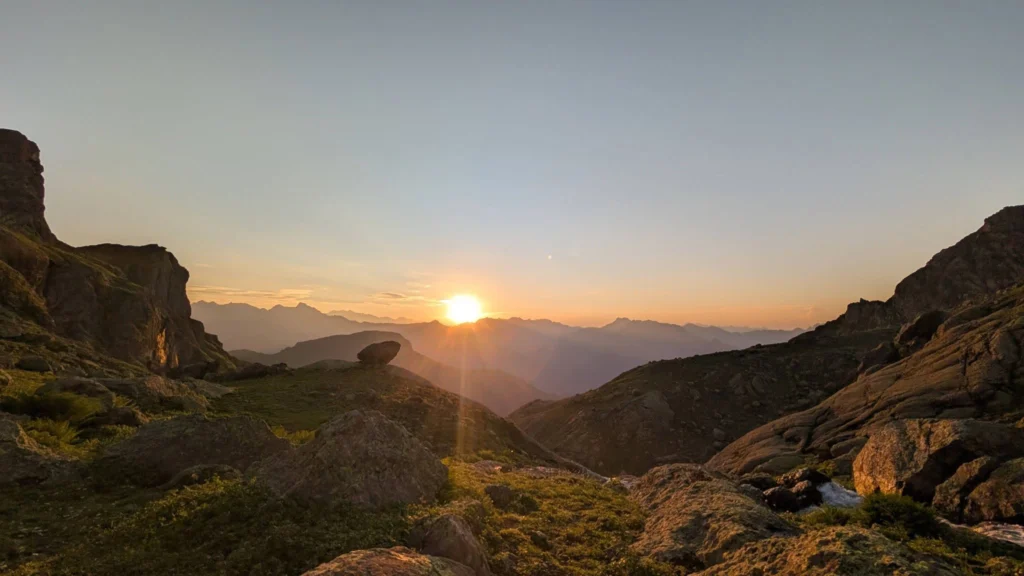
Tusheti has one road in and it is closed for eight months of the year. That single fact explains most of what makes it worth four days of your holiday.
The road is the Abano Pass — seventy-two kilometres of unpaved track over a 2,826-metre col, and the first thing you do on this tour is drive it. It takes most of a day and it is the drive people talk about afterwards: valleys, then treeline, then nothing but grass and rock and the occasional shepherd moving several hundred sheep somewhere you cannot see.
Then you stop driving, which is the point of choosing this tour over the jeep one.
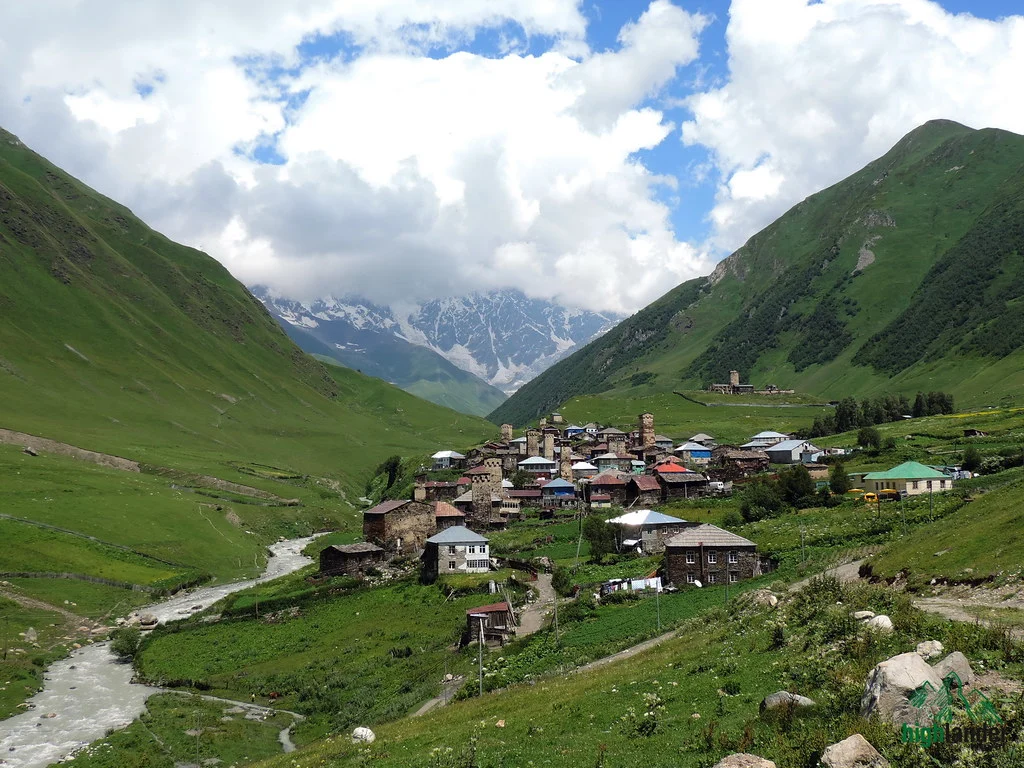
Unagira is a ridge summit at 3,050 metres and it takes a full day: sixteen kilometres and eleven hundred and fifty metres of climbing, out from Omalo and back. From the top the Pirikiti and Gometsari valleys open on either side of you and the tower villages read as small grey clusters a long way below — Dartlo, Kvavlo, Chesho. Between mid-June and mid-July the whole hillside on the way up is rhododendron, pink and white, and there is a small lake near the summit that dries out later in the season.
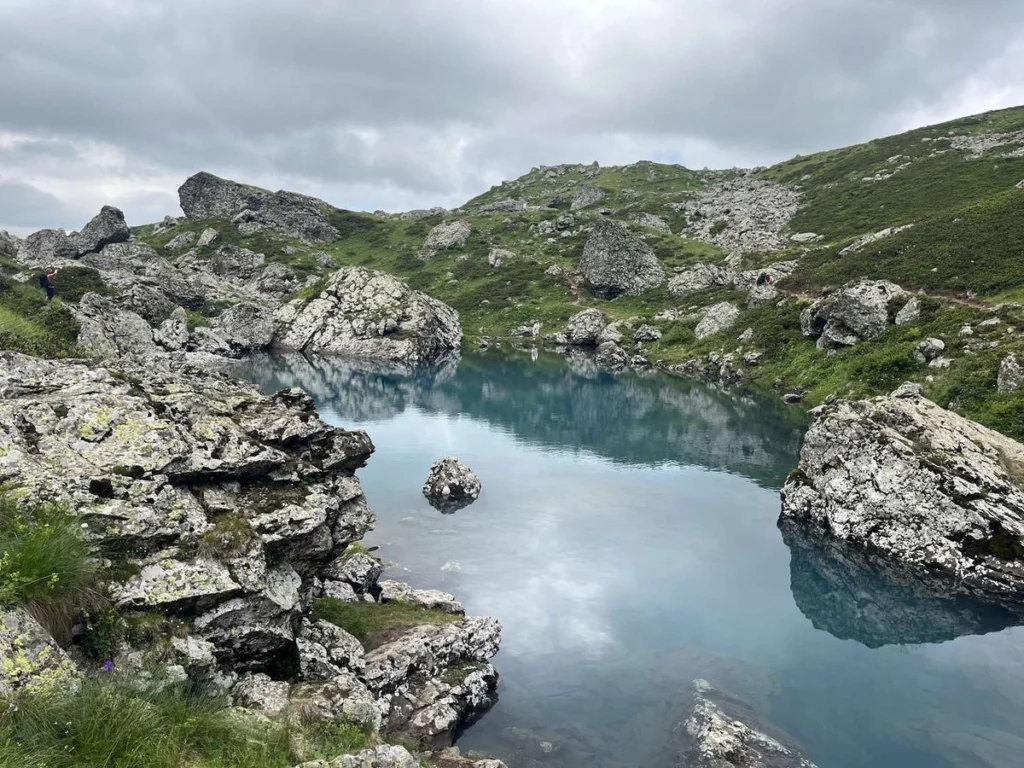
Oreti is the second day and a different kind of walking: fifteen kilometres from Kumelaurta through the summer pastures to a glacial lake at 2,850 metres. This is the day you meet people. Tushetian shepherds bring their flocks up over Abano in June and stay until autumn, and they will offer you tea and cheese whether or not you have any language in common.
And you do not have to walk either of them. Both days can be done on horseback instead — which is the reason this tour works for couples and groups where one person hikes and the other would rather not. Tell us at booking, or on the morning, and we arrange horses.
Book this if you are a regular hiker in good condition, comfortable with six or seven hours on mountain ground and 1,150 metres of ascent, twice. Don’t book it if you hike occasionally, or if what you actually want is to see as much of Tusheti as possible — for that, the 3-day jeep tour covers three valleys and asks far less of your legs.
What you’ll see
Tour highlights
- Unagira Mountain, 3,050 m. A full day out and back to a ridge summit, with the Pirikiti and Gometsari valleys opening on either side and the tower villages of Dartlo, Kvavlo and Chesho spread out far below.
- Oreti Lake, 2,850 m. A glacial tarn in a bowl of peaks, reached through the summer pastures. From the ridge above it you can see most of Tusheti’s gorges at once — it is the photograph people come back with.
- The Abano Pass, 2,826 m. Seventy-two kilometres of unpaved road over one of the highest and most demanding drivable passes in the Caucasus. You cross it twice, and it is not a formality either time.
- Shenako and Diklo. A nineteenth-century church in one, and in the other a village on a ridge a few kilometres from the Russian border, with the Pichekhi fortress on the spur beyond it.
- Rhododendron in flower. Mid-June to mid-July, the slopes on the Unagira climb come out pink and white all the way up.
- Tushetian shepherds at their summer camps. They drive the flocks up over Abano in June and stay until autumn. Expect to be handed tea and cheese; expect the conversation to work anyway.
- Keselo, above Omalo. The tower cluster on the ridge that ends up on the cover of every book about this region, twenty minutes’ walk from where you sleep.
- Alaverdi Cathedral. Eleventh century, around fifty metres tall, and for centuries the tallest building in Georgia. The monks still make wine in qvevri. It is the last thing you see before the mountains start.
- The ethnographic museum in Lower Omalo. Small, and better than it needs to be — clothing, tools, weapons, and enough context to make sense of everything you have walked past.
- Hike it or ride it. Both mountain days can be done on horseback instead of on foot, and different people in the same group can choose differently on the same day.
Step by step
Tour itinerary
Day 1 · Tbilisi — Alaverdi — Abano Pass — Omalo
Driving 7–8 hours · about 1 km on foot at Keselo · 280 m → 2,826 m → 1,900 m · lunch and dinner · guesthouse in Upper Omalo
Out of Tbilisi at seven, north-east over the Gombori Pass into Kakheti. The first stop is Alaverdi, an eleventh-century cathedral about fifty metres tall that was the highest building in Georgia for the better part of a thousand years. It is a working monastery and the monks make wine in buried qvevri, which is a reasonable introduction to the country you are about to spend four days in.
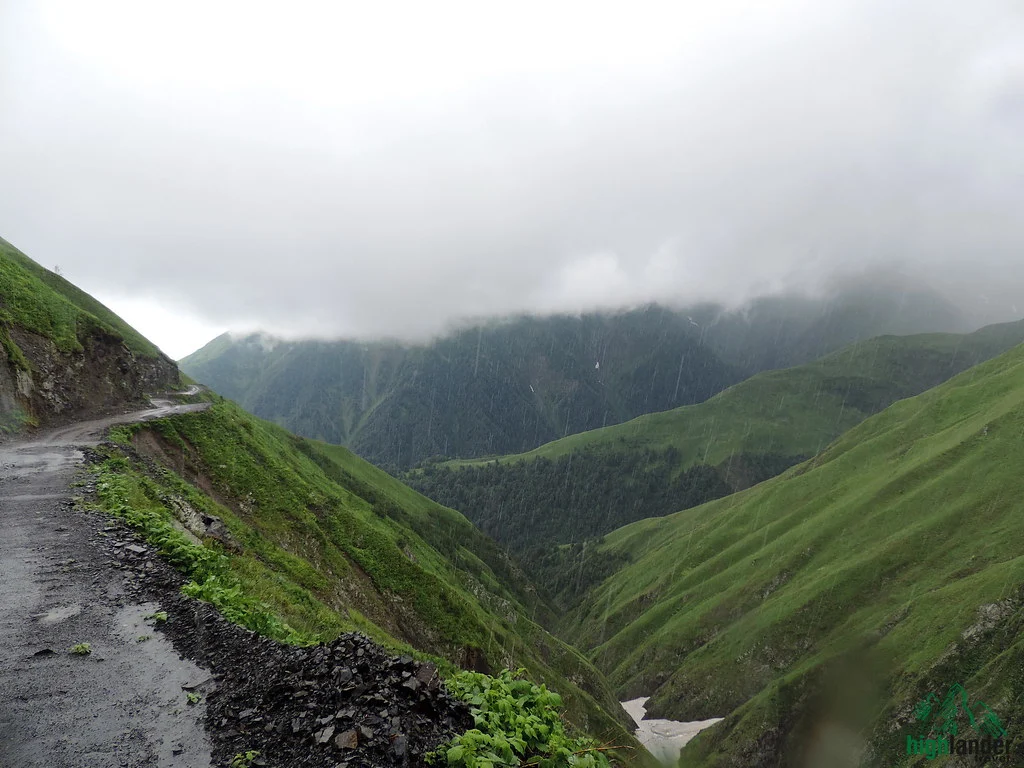
Picnic lunch, and then the road stops being a road. The Abano Pass is seventy-two kilometres of unpaved track climbing to 2,826 metres, and it takes four to five hours in a 4×4 with a driver who does it every week. It is the single most photographed drive in Georgia and the photographs do not do it justice, mostly because the parts that are frightening do not fit in a frame.
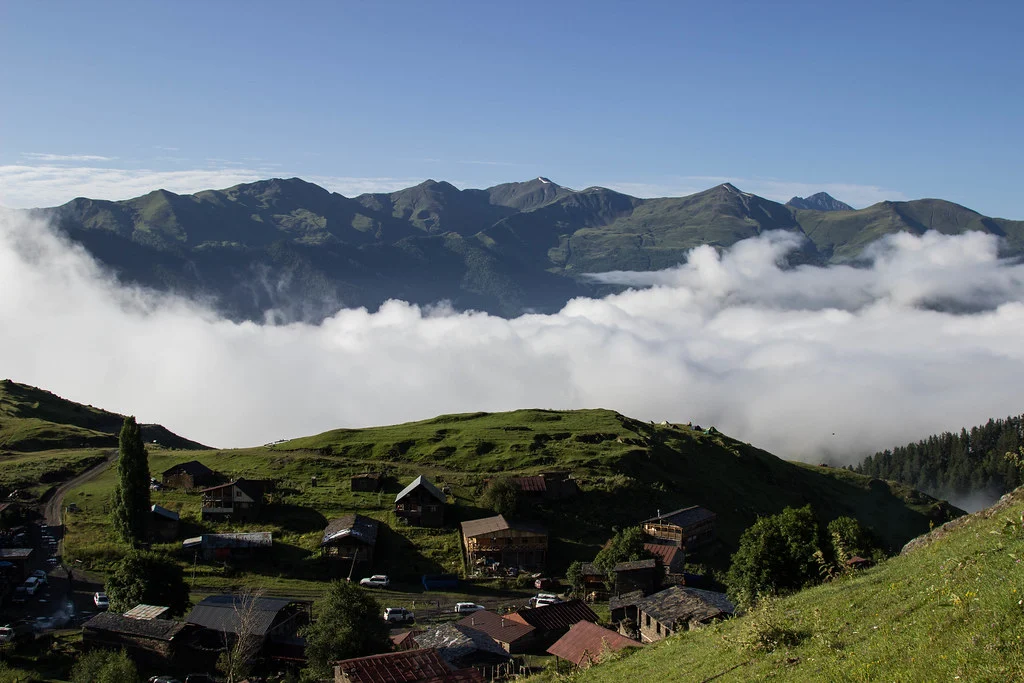
You reach Omalo in the late afternoon. Drop your bags, then walk the twenty minutes up to Keselo — the tower cluster on the ridge above Upper Omalo, and the view that ends up on the cover of every book about Tusheti. It is better in the evening light than at any other time of day, and it costs you nothing after seven hours in a car.
Dinner at the guesthouse with chacha and wine — the traditional welcome, and you will have earned it.
Be realistic about this day. It is seven to eight hours of driving with two stops, and arrival is late afternoon rather than lunchtime. That is simply how long the Abano road takes.
Day 2 · Unagira Mountain, 3,050 m
16 km · 6–7 hours · 1,900 m → 3,050 m → 1,900 m, +1,150 m / −1,150 m · full board · guesthouse in Upper Omalo · can be ridden instead
Breakfast at nine and then the main day.
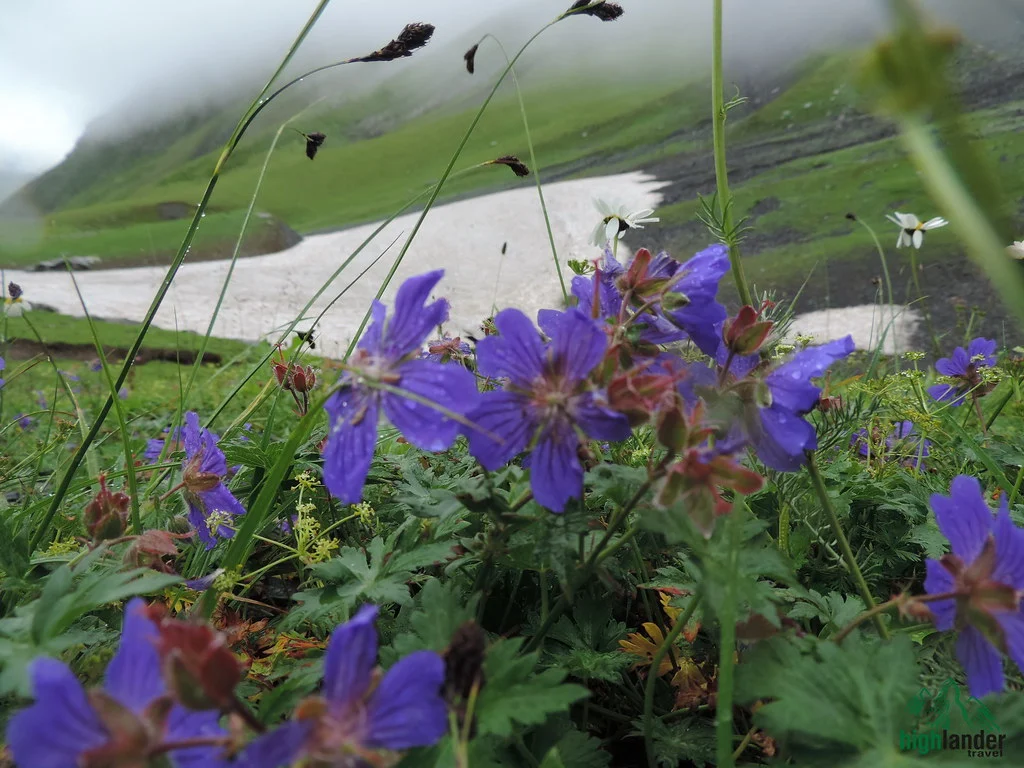
The trail climbs steadily out of Omalo through alpine meadow — eleven hundred and fifty metres of it, which is a real day’s work and the reason the fitness note on this page is not boilerplate. Between mid-June and mid-July the slopes are covered in flowering rhododendron the whole way up, pink and white against the grass, and there is a small seasonal lake near the top that dries out later in the summer.
From the summit ridge the Pirikiti and Gometsari valleys open out on either side. The tower villages are down there as small grey clusters — Dartlo, Kvavlo, Chesho — and on a clear day the peaks keep going until the haze takes them.
Lunch at the top, unhurried, then back down the same ground with a different set of views. Guesthouse by evening, and the beds will feel better than they did last night.
Prefer to ride? The same route can be done on horseback. Tell us at booking, or the night before.
Day 3 · Oreti Lake, 2,850 m
15 km · 5–6 hours · 1,700 m → 2,850 m → 1,700 m, +1,150 m / −1,150 m · full board · guesthouse in Upper Omalo · can be ridden instead (23 km route)
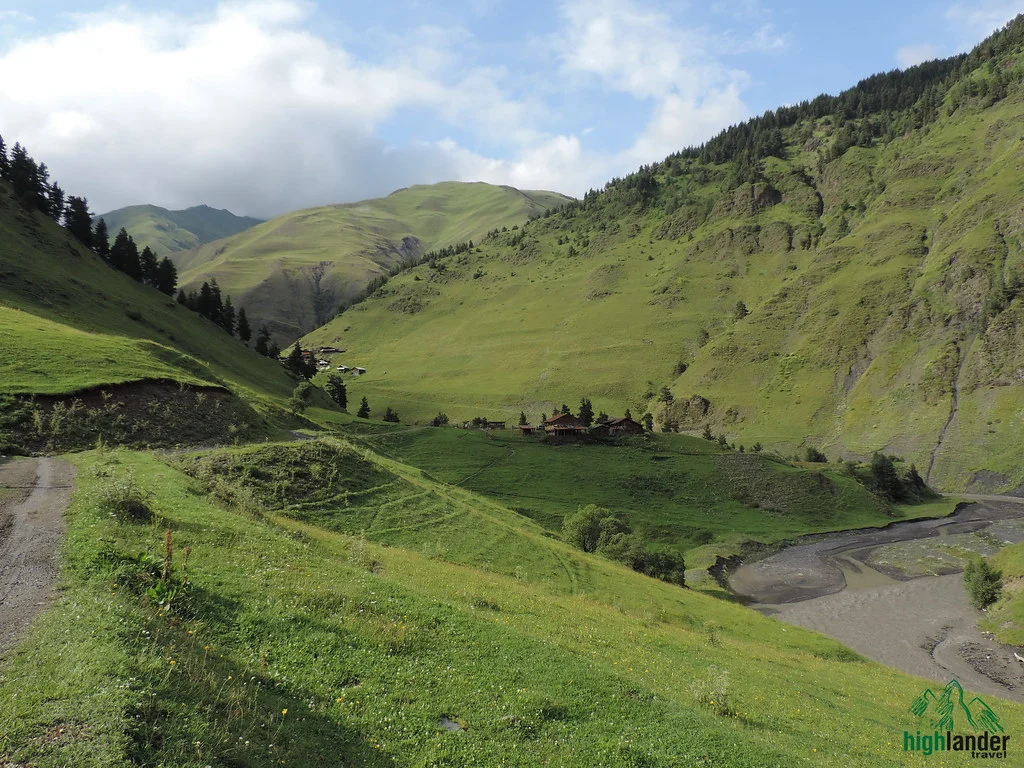
A short drive to Kumelaurta and then up through the summer pastures, which is where this day differs from yesterday: you are walking through worked country rather than empty country, and there are people in it.
Tushetian shepherds still practise transhumance — they bring the flocks up over Abano in June and take them back down in autumn, the same movement in the same months for as long as anyone has counted. Their summer camps are on this route. You will be offered tea and cheese and, if you have any time at all, a conversation that works despite neither side having much of the other’s language.
Oreti sits at 2,850 metres in a classic glacial bowl: cold, clear, the peaks upside down in it on a still morning. From the ridge above the lake you can see most of Tusheti’s gorges at once, which is the view that ends up on people’s walls.
Back down to Kumelaurta, where the vehicle meets you for the short drive to Omalo.
Prefer to ride? The horse route is different and longer — 23 km, starting from the guesthouse rather than from Kumelaurta. Both finish at the lake.
Day 4 · Shenako — Diklo — Pichekhi — the museum — Tbilisi
Driving 8–9 hours in total · about 4 km on foot · max 2,826 m at Abano · breakfast and lunch · in Tbilisi by evening
An early breakfast, because this is a long last day and worth every hour of it.
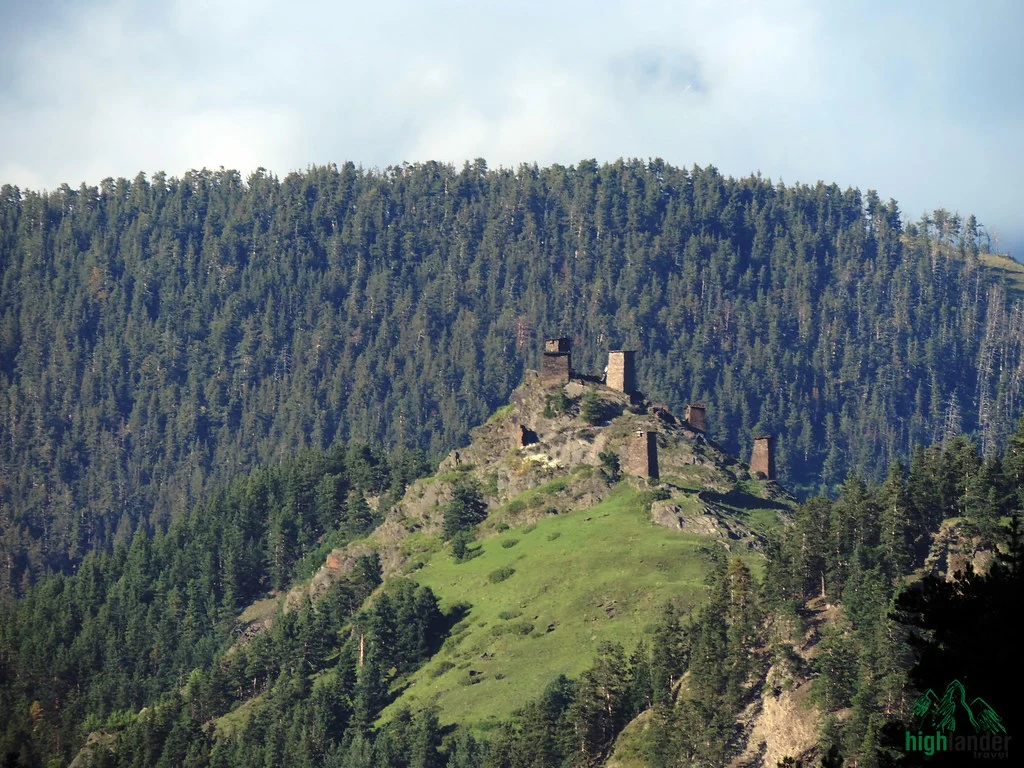
East from Omalo to Shenako, which has a handsome nineteenth-century church and a strong sense of itself, and then on to Diklo — a village on a spur a few kilometres from the Russian border, in a position that makes the reason for its existence fairly obvious. From there it is an hour’s walk out to the Pichekhi fortress on the ridge beyond, which was built to watch the passes for raiding parties out of Dagestan. Standing on those walls explains the towers better than any amount of reading.
Back down through Lower Omalo, where the ethnographic museum is small, well made and genuinely worth the twenty minutes: clothing, tools, weapons, and the household objects that make the last three days make sense.
Then Abano again — just as spectacular going down and, most people find, slightly more alarming — into Kakheti, with a stop for lunch, and into Tbilisi in the evening.
A note on the order. Shenako, Diklo and Pichekhi used to sit at the end of Day 1, which made that day about fifteen hours long. They are here instead. If you would rather see them on arrival and have a shorter final day, tell us and we will run it the other way round — but we will drop the Pichekhi walk, because it does not fit.
Starting from
€650
per person
Locally operated since 2011
We reply within 24 hours
What your price covers
What’s included
Included
- All transport from and to Tbilisi in a 4×4 with a driver who knows the Abano road
- Licensed English-speaking hiking guide for all four days
- Three nights in a family guesthouse in Upper Omalo
- All meals as shown — three breakfasts, packed lunches on both hiking days, three dinners
- Entrance fees to the monuments and the ethnographic museum
- Welcome chacha and wine tasting on arrival
- First aid kit and emergency communication carried by the guide
Not included
- International flights
- Travel insurance — required, covering hiking and emergency evacuation. We ask to see it before departure
- Horse riding instead of hiking — supplement per person per day. [Insert your figure here. Publishing it matters more than the number itself; see the pack.]
- Personal hiking gear — boots, waterproofs, poles
- Alcoholic drinks beyond the welcome tasting
- Tips for the guide, driver and guesthouse hosts
- Personal expenses and souvenirs
Photographs
Gallery
Where you’ll go
Map & route
Tbilisi — city centre
Gombori Pass
Alaverdi Cathedral
Abano Pass
Upper Omalo
Keselo Fortress
Oreti Lake
Upper Omalo
Shenako
Diklo
Practical details
Good to know before you go
Who this tour suits
It suits active travellers in good condition who want to earn the view rather than drive to it. Regular hikers who are comfortable with six to seven hours on mountain ground and 1,150 metres of ascent per day, at up to 3,050 m. Anyone who wants more of Tusheti’s high country than a jeep tour reaches. And — because either day can be ridden — couples and groups where fitness is not evenly matched.
It doesn’t suit occasional hikers, or anyone unused to sustained ascent and altitude. Travellers who want to see as much of Tusheti as possible in the time, who should take the jeep tour. Anyone needing hotel comfort: these are family guesthouses with shared bathrooms. And anyone arriving without proper boots.
Fitness, honestly
Two of the four days are full mountain days with over 1,150 metres of ascent each, at altitudes up to 3,050 m, on ground that is steep and rocky in places. The other two days are long drives with short walks. If you hike six hours or more in mountains regularly, you will be fine and you will enjoy it. If you don’t, this will be the hardest holiday you have taken — and the horse option exists precisely so that you have a way out that is not cancelling.
When to come
| Period | What you get |
|---|---|
| Late June – mid-July | Rhododendrons in flower on the Unagira climb and the seasonal lake still full. The Abano road has usually just opened |
| July – August | The most settled weather and the most reliable conditions on both summits |
| September – early October | Autumn colour, far fewer visitors, cold nights. The road closes around mid-October |
The season is set by the Abano Pass, which typically opens in mid-June and closes in mid-October depending on snow. We watch it and will tell you early if a date looks marginal.
Where you sleep
Three nights in the same family guesthouse in Upper Omalo, which means you unpack once. Rooms are simple and clean, bathrooms are shared, hot water is usually available and occasionally is not. The cooking and the welcome are the reason people remember the place.
What to bring
Essential: broken-in hiking boots with ankle support, layered clothing, rain jacket, sun protection, water bottle, daypack, personal medication.
Strongly recommended: trekking poles for the descents, a warm fleece and a hat and gloves for the summits — it is cold at 3,000 metres even in August — trail snacks, and spare camera batteries, because there is not much charging in Omalo.
Trail conditions
The trails are old and well worn but they are not waymarked the way European paths are, and there are no signposts at junctions. Expect alpine meadow, rocky sections, some steep ground near both summits, and mud after rain. Your guide knows the routes; that is a large part of what you are paying for.
Group size
Two to ten. Private departures, your group only. The price falls sharply with group size — see the table above.
If this is too much
The 3-day jeep tour reaches the same region and three of its valleys with very little walking. The 4-day horse riding tour covers similar country in the saddle throughout. And if this sounds too easy rather than too hard, the 7-day Atsunta Pass trek walks into Tusheti over a 3,431-metre pass from Khevsureti.
From our travellers
Reviews
Before you book
Frequently asked questions
How fit do I need to be for this hiking tour?
Good fitness is required, not general good health. You should be comfortable with six to seven hours of hiking and 1,150 metres of ascent in a single day, at altitudes up to 3,050 m — and then doing it again the next day. Regular hikers with mountain experience will manage. Occasional hikers, or anyone unused to altitude, will find it hard.
What if I can’t complete a hike?
Your guide watches the group and the conditions throughout. If you are struggling the options are to shorten the route, slow down and take more breaks, or turn back to the vehicle while the others continue. On both mountain days the horse-riding alternative can sometimes be arranged at short notice if horses are free.
Can I mix hiking and horse riding?
Yes, and this is the most useful thing about the tour. You can hike one day and ride the other, or two people in the same group can do different things on the same day. Tell us at booking so we can arrange horses. Riding carries a supplement.
What is the altitude like?
The maximum is 3,050 m on Unagira. Most people adjust well because the ascent is gradual and you come back down every evening — you never sleep high. Some breathlessness near the top is normal. Drink plenty, keep the pace steady, and tell your guide about any headache or nausea rather than pushing on quietly.
What is Unagira Mountain?
A ridge summit at 3,050 m above Omalo, and the objective of Day 2. From the top the Pirikiti and Gometsari valleys open on either side, with the tower villages of Dartlo, Kvavlo and Chesho visible far below. The route is covered in flowering rhododendron from mid-June to mid-July and passes a small seasonal lake near the summit.
What is Oreti Lake?
A glacial lake at 2,850 m in Tusheti, and the objective of Day 3. The route reaches it through the summer pastures where Tushetian shepherds graze their flocks, and the ridge above it gives a view across most of Tusheti’s gorges at once. It is the most photographed spot in the region.
When is the best time for hiking in Tusheti?
Late June to early October, which is when the Abano road is open. Mid-June to mid-July gives you the rhododendrons in flower and the seasonal lake on Unagira. July and August have the most settled weather. September brings autumn colour and far fewer people.
Are the trails technically difficult?
No technical skill is needed — no ropes, no scrambling that needs hands. There are steep sections and rocky ground, and the trails are well worn but not waymarked in the European fashion, so a guide is not decoration. Boots with ankle support are essential.
What if the weather is bad?
Mountain weather does what it likes and we carry rain gear. Light rain does not stop the hikes. In severe conditions we shorten a route or substitute something else — that call belongs to the guide.
What is the food like on hiking days?
Breakfast at the guesthouse before you set off, a packed lunch for the trail, dinner back at the guesthouse. Traditional Tushetian and Georgian mountain cooking, hearty and in large quantity. Vegetarian is straightforward with notice.
How does this differ from the jeep tour in Tusheti?
The 3-day jeep tour covers three valleys and a great deal more ground, with very little walking. This one goes to two mountain objectives and spends its time up high instead. Choose the jeep tour for coverage; choose this one if you want to stand on a summit.
Can children do this tour?
We recommend a minimum age of 14, with previous hiking experience. Fifteen to sixteen kilometres and 1,150 metres of ascent is demanding for adults. Talk to us about individual cases — the horse-riding option changes the answer for some families.
Is travel insurance required?
Yes. It must cover hiking and emergency evacuation. Mountain rescue in Tusheti is limited and the nearest hospital is on the far side of the Abano Pass, which is why we ask to see the policy rather than take your word for it.
Ready when you are
Tell us your dates and how many of you are travelling. We’ll come back within 24 hours with availability, a confirmed price, and your guide’s name.