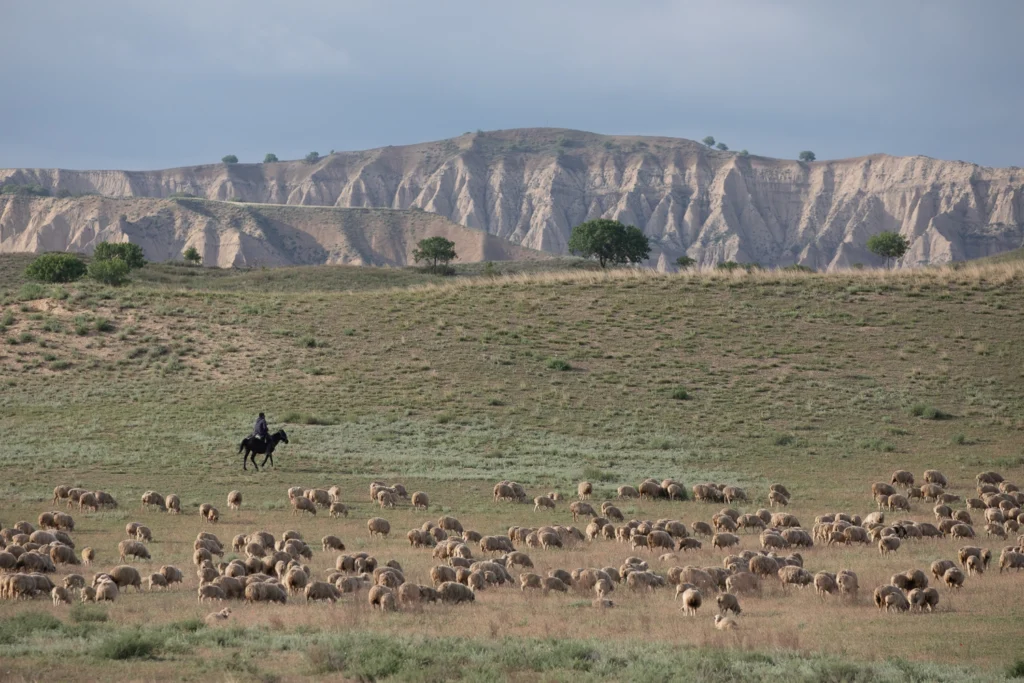
This two-day Khevsureti tour is a journey into one of Georgia’s wildest and most isolated mountain regions. We cross the Greater Caucasus by 4×4, follow the Arghuni and Andaki valleys, sleep beside the fortress village of Shatili and travel as far as Ardoti—one of the final inhabited points on the road.
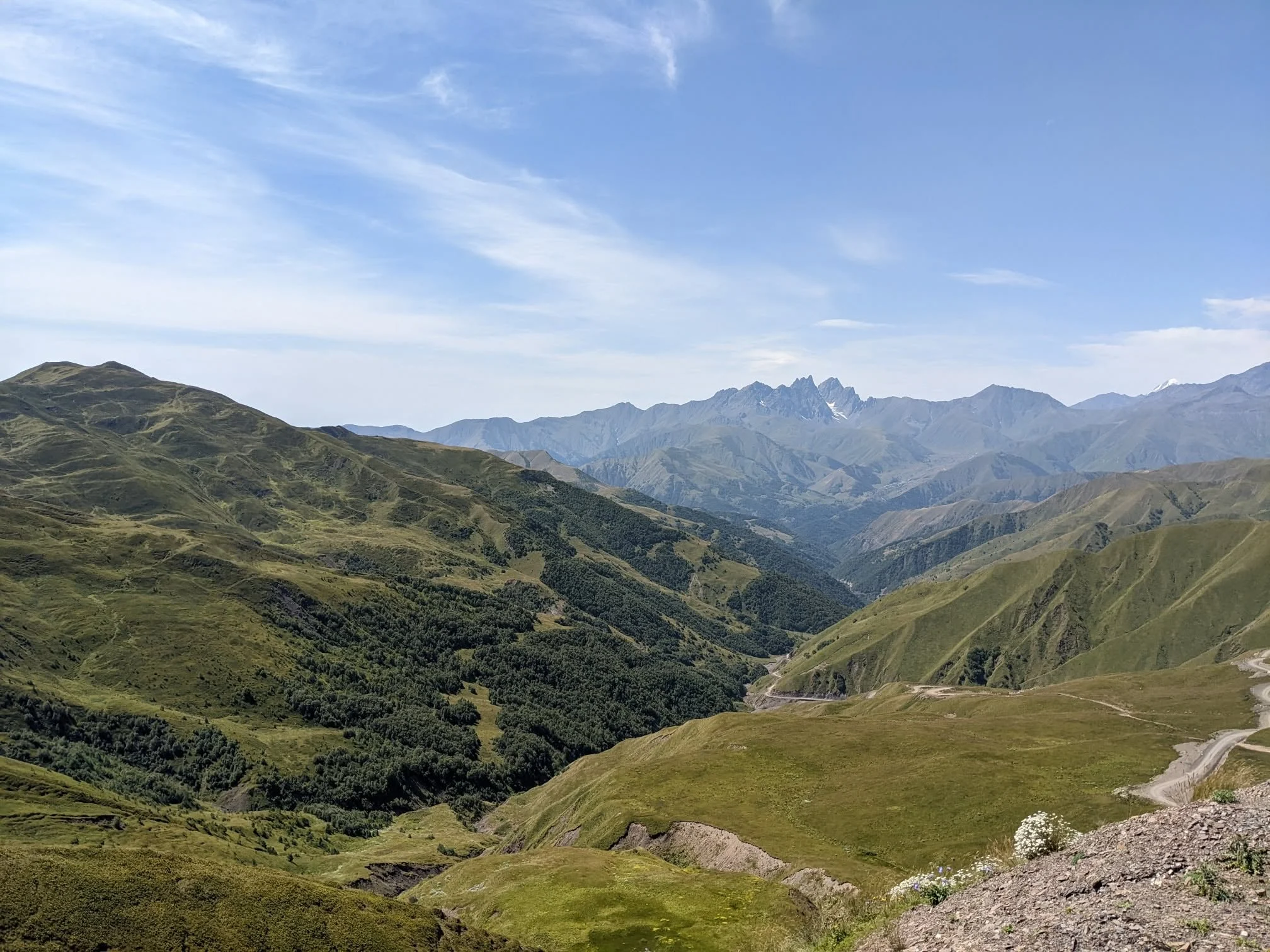
Khevsureti does not reveal itself quickly. Reaching it means leaving the paved roads behind and crossing Datvisjvari Pass, where the road climbs to approximately 2,680 metres. The journey is long, rough in places and completely worthwhile. Beyond the pass, the landscape changes into steep green slopes, narrow river gorges and small settlements built from the same dark stone as the mountains around them.
On the first day, we visit the small ethnographic museum in Korsha before climbing toward Datvisjvari. After crossing the pass, we stop at the solitary tower of Lebaiskari and the remains of Kistani, then continue to Shatili. Here, stone houses and defensive towers rise together like a single fortress. We explore the old village on foot and spend the night in a local guesthouse.
The second day takes us deeper into Pirikita Khevsureti. We stop respectfully at the Anatori burial vaults, also commonly called Anatorebi, drive through the remote Andaki Valley and climb to the fortified ruins of Mutso. From Mutso, we continue to Ardoti, the final point of our route, before returning to Tbilisi along the same mountain road.
This is not a polished resort experience, and that is part of its character. Guesthouses in Shatili are small and simple. Rooms are basic, electricity interruptions are common, and Wi-Fi, mobile coverage and constant hot water cannot be guaranteed. What you receive instead is genuine mountain hospitality, home-cooked food, silence after dark and the rare experience of waking up in one of Georgia’s most remote historic regions.
This tour suits: adventurous travelers, photographers, history lovers and visitors who are comfortable with long drives, rough roads, simple accommodation and a steep walk to Mutso.
This tour may not suit: travelers expecting hotel-level comfort, people who become unwell on winding roads, visitors with serious knee or mobility problems and anyone who prefers a tightly timed itinerary. In Khevsureti, weather and road conditions always have the final word.
What you’ll see
Tour highlights
- Korsha Ethnographic Museum: A small, personal introduction to Khevsur clothing, weapons, household objects and mountain traditions.
- Datvisjvari Pass: Cross the main ridge of the Greater Caucasus at approximately 2,680 metres.
- Lebaiskari: Stop beside one of the region’s best-preserved freestanding defensive towers.
- Kistani: See the remains of another historic Khevsur fortified settlement along the road to Shatili.
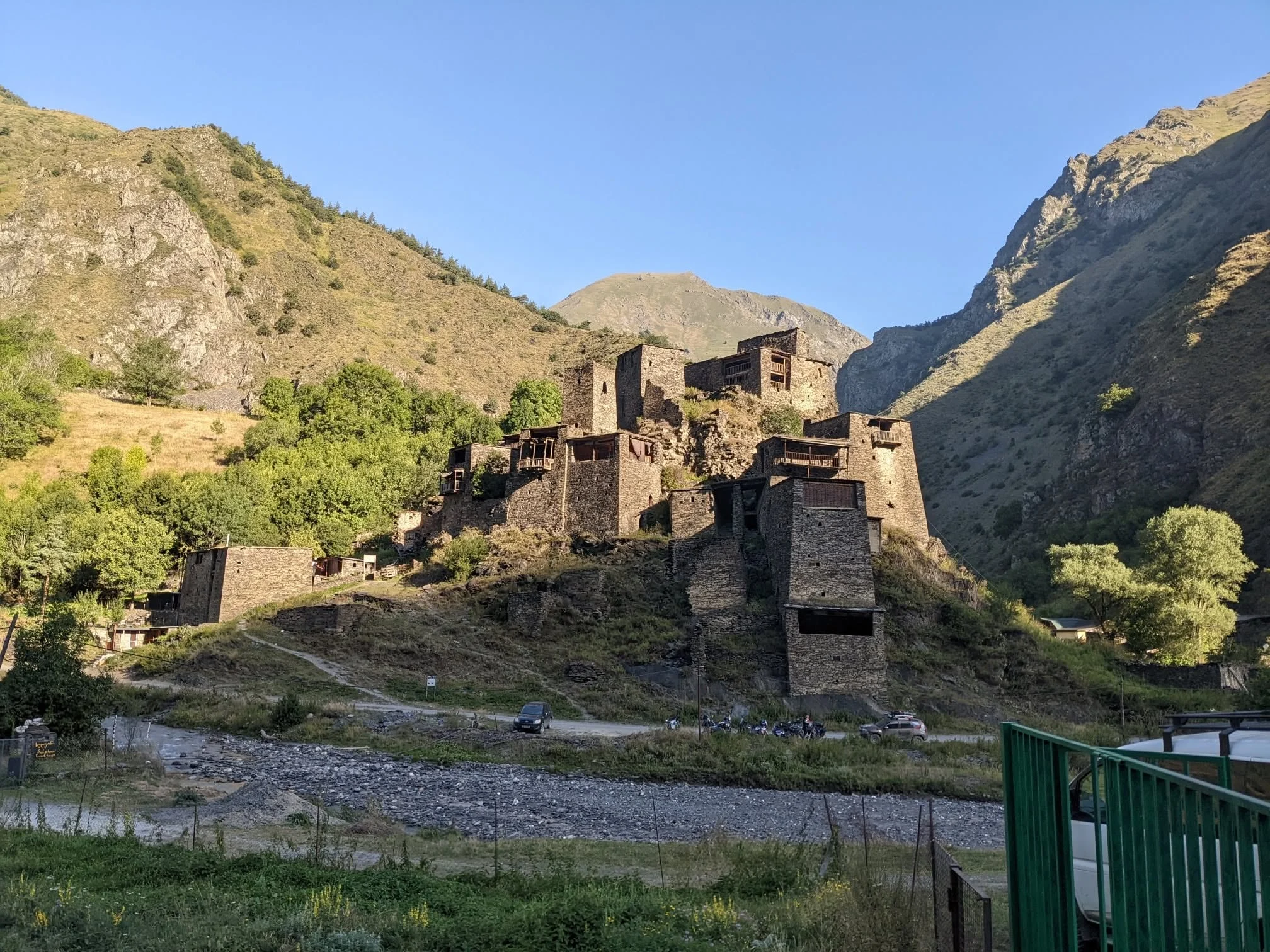
- Shatili: Walk through the narrow lanes, interconnected houses and defensive towers of Georgia’s famous fortress village.
- Overnight in Khevsureti: Stay in a simple family guesthouse and experience the silence of the high mountains after dark.
- Anatori (Anatorebi) burial vaults: Visit one of Khevsureti’s most solemn historical sites with appropriate respect.
- Mutso: Climb the steep path to a fortified village dramatically built into a rocky mountainside.
- Ardoti: Continue through the Andaki Valley to the final and most remote point of the tour.
- Private 4×4 journey: Travel through gorges, mountain passes and remote valleys inaccessible to ordinary tour buses.
Step by step
Tour itinerary
Day 1: Tbilisi – Korsha – Datvisjvari Pass – Lebaiskari – Kistani – Shatili
Early departure from Tbilisi
We leave Tbilisi early in the morning in a 4×4 vehicle. This is a long mountain journey, so an early start gives us time for stops and allows us to reach Shatili before evening. After leaving the capital, the road follows the Aragvi valleys toward the mountains of Pshavi and Khevsureti.
As the settlements become smaller and the slopes grow steeper, it becomes clear that we are heading somewhere very different from Georgia’s better-known tourist routes. The road is part of the experience: rivers, forested valleys, scattered villages and increasingly dramatic mountain views accompany us north.
Korsha Ethnographic Museum
Our first cultural stop is the ethnographic museum in Korsha, housed in a reconstructed stone tower. It is a small museum rather than a formal city institution, but it gives useful context for everything we will see during the next two days. Its collection introduces traditional Khevsur clothing, armour, weapons, agricultural tools, household objects and old photographs.
The museum is locally managed and opening can depend on the custodian’s availability. If it is unexpectedly closed, we will still stop in Korsha and continue the historical introduction with the guide.
Climb to Datvisjvari Pass
Beyond Korsha, the road begins its serious climb toward Datvisjvari—“Bear Cross”—Pass. At approximately 2,680 metres, this is the highest road point of the tour and the gateway between southern and northern Khevsureti.
We stop near the top when weather and road conditions allow. On a clear day, the view opens across several layers of the Greater Caucasus. Even in summer, the air can be cold and the weather can change quickly. Snow sometimes remains on the surrounding slopes after the valleys below have turned green.
Lebaiskari Tower
Descending from the pass into Pirikita Khevsureti, we reach Lebaiskari. Its tall medieval tower stands alone beside the road, a striking first encounter with the defensive architecture of northern Khevsureti. We stop for photographs and a closer look at how these narrow stone towers were built to serve as both shelter and protection.
Kistani
We continue through the gorge to Kistani, where the remains of fortified houses and towers cling to the slope above the road. Kistani is quieter and less restored than Shatili, which makes it easier to imagine how isolated communities once controlled movement through these valleys.
Arrival and walking tour in Shatili
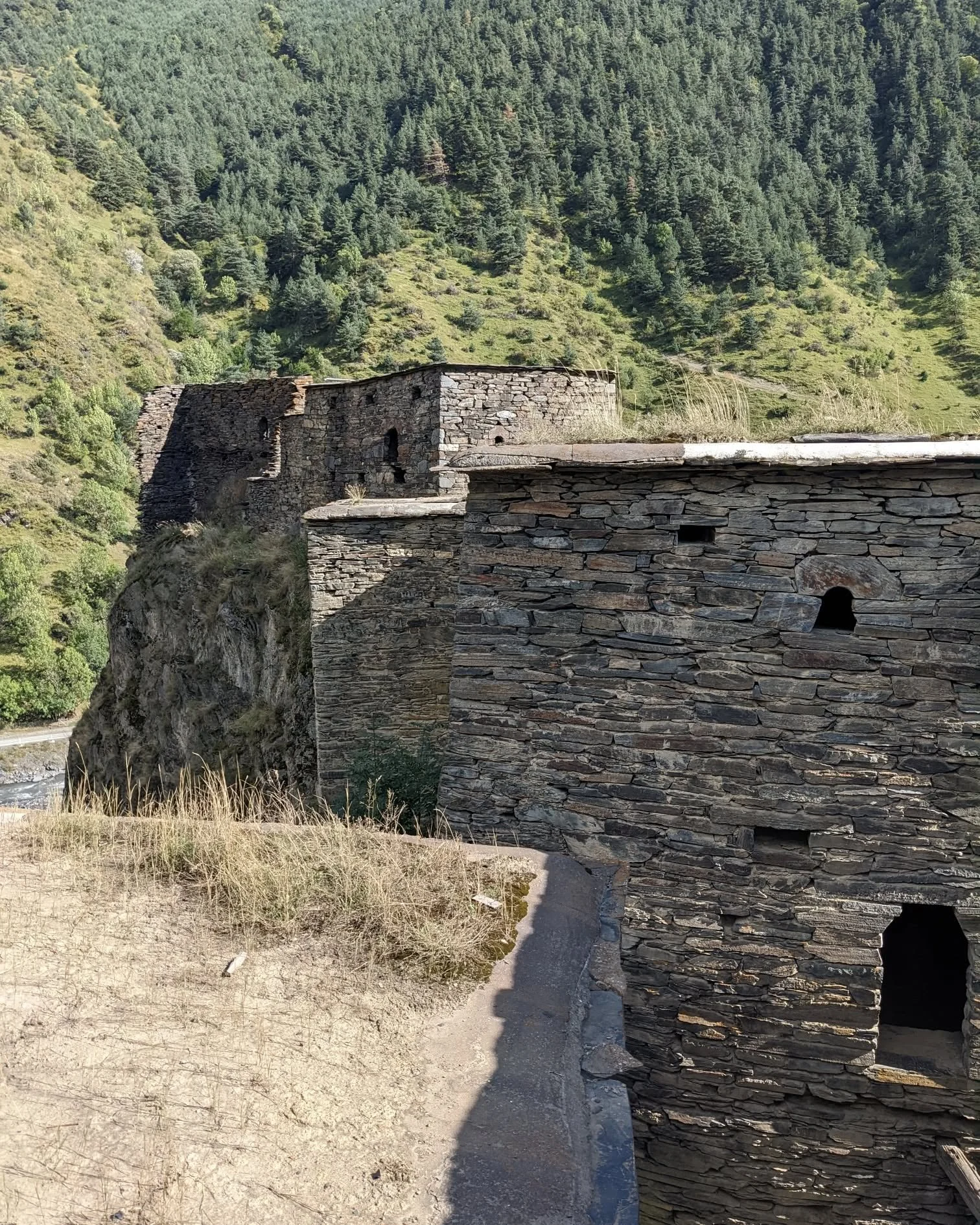
By late afternoon or early evening, we arrive in Shatili. The old settlement is not arranged like an ordinary village. Its stone houses, passages, terraces and towers were built close together, creating a compact defensive complex above the Arghuni River.
We explore Shatili on foot, walking through narrow lanes and between the old tower houses. The ground is uneven, with stone steps and low passages, so sturdy shoes are important. Your guide explains how the interconnected buildings worked as homes, watchtowers and a refuge during attacks.
After the walk, we check into a family guesthouse and have time to rest, enjoy dinner and watch the light fade over the surrounding mountains.
Overnight: Family guesthouse in or near Shatili.
Please expect simple conditions: Guesthouses in Shatili are basic mountain homes, not hotels. Rooms may be small, bathrooms can be simple or shared depending on availability, and electricity cuts occur frequently. Mobile signal, Wi-Fi, continuous hot water and charging facilities cannot be guaranteed. Bring a charged power bank and keep a small torch or phone light accessible.
Day 2: Shatili – Anatori – Mutso – Ardoti – Tbilisi
Morning in Shatili
We begin with breakfast at the guesthouse. If time and weather allow, there is a final opportunity to photograph Shatili in the softer morning light before we drive deeper into the border valleys.
Anatori (Anatorebi) burial vaults
A short drive from Shatili brings us to Anatori, a small group of medieval burial vaults above the river. Local history remembers Anatori as a place connected with epidemic and voluntary isolation. It is one of the most moving sites in Khevsureti.
Human remains are still present inside the stone vaults. We visit quietly, do not enter or touch the structures, and avoid intrusive photography. Anatori deserves the same respect as a cemetery.
Drive through the Andaki Valley
From Anatori, the route continues along a rough road through the Andaki Valley. The landscape becomes even more isolated: steep cliffs rise directly from the river, ruined towers appear on distant slopes and the road narrows as it follows the gorge.
This section is close to Georgia’s northern border. Every traveler should carry a passport, and access can be affected by border-police instructions, road repairs or local conditions.
Climb to Mutso Fortress
Mutso appears high above the road, built into a steep rocky ridge. From the parking area, we climb on foot toward the restored towers and ruined houses. The ascent is short but steep, with loose stones, irregular steps and little shade. Most visitors need approximately 30–45 minutes to reach the upper part, depending on pace and stops.
The effort is rewarded with one of the most unforgettable views in the Georgian Caucasus. Mutso’s towers seem to grow directly from the rock, looking down over the meeting of narrow mountain valleys. We explore carefully, listen to the stories associated with the fortress and take time for photographs before descending by the same path.
Travelers who cannot manage the climb may wait near the vehicle and enjoy the view from below, but they will not be able to enter the upper fortress complex.
Ardoti—the final point of the journey
After Mutso, we continue to Ardoti, a tiny mountain settlement and the final road point of our itinerary. The village sits above the gorge in a landscape that feels completely removed from modern city life. We stop to look across the valley, see the surviving stone buildings and appreciate just how far we have travelled into the Caucasus.
Ardoti is a living settlement, however small, so we respect private homes, fields and local residents. Access beyond Mutso is always subject to road conditions and any instructions from border authorities.
Return to Tbilisi
From Ardoti, we turn back along the same road: past Mutso and Anatori, through Shatili and the Arghuni Gorge, over Datvisjvari Pass and south through Korsha. The return is long, but the changing evening light makes the mountain road feel different from the previous day.
We arrive in Tbilisi late in the evening. The exact time depends on the road, weather, stops and traffic. It is best not to schedule a flight, train or fixed evening event for the same night.
Starting from
€280
per person
Locally operated since 2011
We reply within 24 hours
What your price covers
What’s included
Included
- Private 4×4 transportation for two days
- Experienced driver familiar with the Khevsureti road
- Professional English-speaking guide
- Hotel pickup and drop-off in Tbilisi
- One night in a family guesthouse in or near Shatili
- Dinner on Day 1
- Breakfast on Day 2
- Entrance to Korsha Ethnographic Museum when open
- Bottled water during the drive
Not included
- Lunch on Day 1 and Day 2
- Additional food and drinks
- Personal expenses and souvenirs
- Travel and medical insurance
- Tips for the guide and driver
- Services or activities not listed in the itinerary
Photographs
Gallery
Where you’ll go
Map & route
Korsha
Datvisjvari Pass
Shatili
Mutso Fortress
Practical details
Good to know before you go
Practical Information
- Duration: 2 days / 1 night
- Starting and ending point: Tbilisi
- Transport: 4×4 vehicle
- Difficulty: Medium
- Main physical challenge: Steep climb and descent at Mutso
- Accommodation: Simple family guesthouse in or near Shatili
- Season: Usually June to October, depending on when Datvisjvari Pass opens and closes
- Driving: Long days on winding, partly unpaved mountain roads
Accommodation in Shatili
Accommodation is in a small family-run guesthouse. These properties offer warmth and genuine hospitality, but facilities are basic. Depending on availability, bathrooms may be private or shared. Electricity cuts are common in the region, and Wi-Fi, mobile reception, hot water and charging cannot be guaranteed throughout the stay.
Please bring realistic expectations. The reason to stay here is the location and the experience of spending a night in Khevsureti—not hotel-style service or luxury facilities.
What to Bring
- Passport: The second-day route enters a controlled border area.
- Strong walking shoes: Mutso and Shatili have steep, uneven stone paths.
- Warm layers: Datvisjvari Pass can be cold even in summer.
- Rain jacket: Mountain weather changes quickly.
- Sun protection: Bring sunscreen, sunglasses and a hat.
- Power bank: Electricity cuts in Shatili are frequent.
- Small torch: Useful inside the guesthouse and around the village after dark.
- Personal medication: Pharmacies and medical services are not readily available.
- Cash in Georgian lari: Card payment and cash machines should not be expected.
- Small day bag: Carry water, camera and layers during the Mutso climb.
Road, Weather and Safety
The road to Shatili crosses a high mountain pass and includes unpaved sections, sharp bends and occasional rockfall or water damage. A 4×4 vehicle and a driver experienced on this route are essential.
The published itinerary is the plan, but safety comes first. Heavy rain, snow, landslides, road works, high river levels or border-police instructions may require a delayed departure, changed stop or shortened route. Ardoti is the most remote point and may be omitted if access is unsafe or restricted.
Travelers should have insurance that covers mountain travel, medical treatment and evacuation. Khevsureti has limited medical infrastructure and long transfer times to major hospitals.
Best Time for the Tour
The normal season is June to October, but dates cannot be guaranteed far in advance because access depends on snow and the condition of Datvisjvari Pass. July, August and September usually offer the most reliable access. June can still bring snow near the pass, while early autumn nights are cold and the first snowfall can close the route quickly.
From our travellers
Reviews
Before you book
Frequently asked questions
================================================================= –>
How long is the drive from Tbilisi to Shatili?
The direct drive usually takes around five hours in good conditions, but the first day is longer because we stop at Korsha, Datvisjvari Pass, Lebaiskari and Kistani. Road works, weather and photo stops can change the timing.
Why is a 4×4 vehicle necessary?
The road crosses Datvisjvari Pass and includes unpaved, narrow and damaged sections. The route toward Mutso and Ardoti is especially rough. A high-clearance 4×4 and an experienced mountain driver are necessary for comfort and safety.
What is the best time for a Khevsureti tour?
The usual season is June to October. July through September normally gives the most reliable road access, but the exact opening and closing dates depend on snow and the condition of Datvisjvari Pass.
What is the guesthouse in Shatili like?
It is a simple family-run mountain guesthouse, not a hotel. Rooms and bathrooms are basic, and bathrooms may be shared depending on availability. The hosts normally provide home-cooked food and warm hospitality.
Will there be electricity, Wi-Fi and mobile signal?
Electricity cuts are frequent in Shatili. Wi-Fi, mobile reception, continuous hot water and charging facilities cannot be guaranteed. Bring a charged power bank, download anything important in advance and tell family that you may be offline.
How difficult is the climb to Mutso?
The path is short but steep, with uneven stones and little shade. The climb normally takes around 30–45 minutes each way, depending on pace. Good footwear and reasonable balance are important. Guests who cannot climb can wait below, but will not be able to visit the upper ruins.
Do I need to carry my passport?
Yes. Anatori, Mutso and Ardoti are close to Georgia’s northern border, and document checks may take place. Every traveler should carry the passport or identification document used to enter Georgia. Any additional access formalities are checked before departure.
Is Ardoti always accessible?
No. Ardoti is the most remote stop and access depends on the road, weather, river conditions and instructions from border authorities. If the route is unsafe or restricted, the guide will adjust the itinerary.
Is this tour suitable for children?
It can suit older children who are comfortable with long drives, simple accommodation and steep walking. It is generally not recommended for very young children or children who become carsick easily. Parents should discuss the child’s age and experience before booking.
Can travelers with limited mobility join?
The long drive may be possible, but Shatili has uneven stone passages and Mutso requires a steep climb. The tour is not fully accessible. Contact us before booking so we can explain which stops may be viewed from the vehicle or lower paths.
What happens if the weather changes?
Mountain weather can change quickly. The guide and driver may change departure times, shorten a stop, omit Ardoti or turn back if road conditions become unsafe. Safety decisions are final.
Can I fly or take a train on the evening we return?
We strongly advise against it. The arrival time in Tbilisi is unpredictable because this is a long remote-road journey. Keep the evening free and schedule flights or trains for the following day.
Ready when you are
Tell us your dates and how many of you are travelling. We’ll come back within 24 hours with availability, a confirmed price, and your guide’s name.