In the spring of 1616 the Persian shah, Abbas I, came over the mountains into Kakheti and burned most of what mattered in it. The royal capital at Gremi — a walled Silk Road town with a king’s palace, a merchants’ quarter and a church on a hill — was destroyed so thoroughly that today the church and one tower stand alone in a field, and the rest of the town is under the grass. Forty kilometres away, the academy at Ikalto, where Georgia had taught theology, astronomy and winemaking for four hundred years, was burned in the same campaign and never taught anyone again.
A hundred and fifty years later, the Georgians built Sighnaghi: a whole town wrapped in four and a half kilometres of wall with twenty-three towers, on a ridge with a view of everything coming. It is now marketed as the town of love, which is true enough — it has a twenty-four-hour marriage registry — but it was built by people who had learned exactly what happens to an unwalled town in this valley.
That is the day. Not a wine tour and not a viewpoint tour: a run through what happened to eastern Georgia between the third century and the eighteenth, in the order the buildings tell it.
You start earlier still, at Ujarma, a hilltop fortress above the Iori river with walls that go back to the era of Vakhtang Gorgasali. It guarded the road east and it was a royal residence until the Arab invasions of the eighth century took it apart. Then Ikalto, founded in the sixth century by one of the Assyrian Fathers, with its stone wine presses and buried qvevri still in the grounds — the practical side of a monastery that taught crafts alongside scripture, and where tradition says Shota Rustaveli studied. Then Gremi. Then Sighnaghi, for the wall, the view down the Alazani valley to the Caucasus, and lunch.
Be clear-eyed about the shape of it: this is a long day, roughly four hundred kilometres, and you will spend around six hours in the car. What you get for that is a coherent story rather than a set of stops — and three places that most visitors to Kakheti drive straight past on their way to a cellar.
What you’ll see
Tour highlights
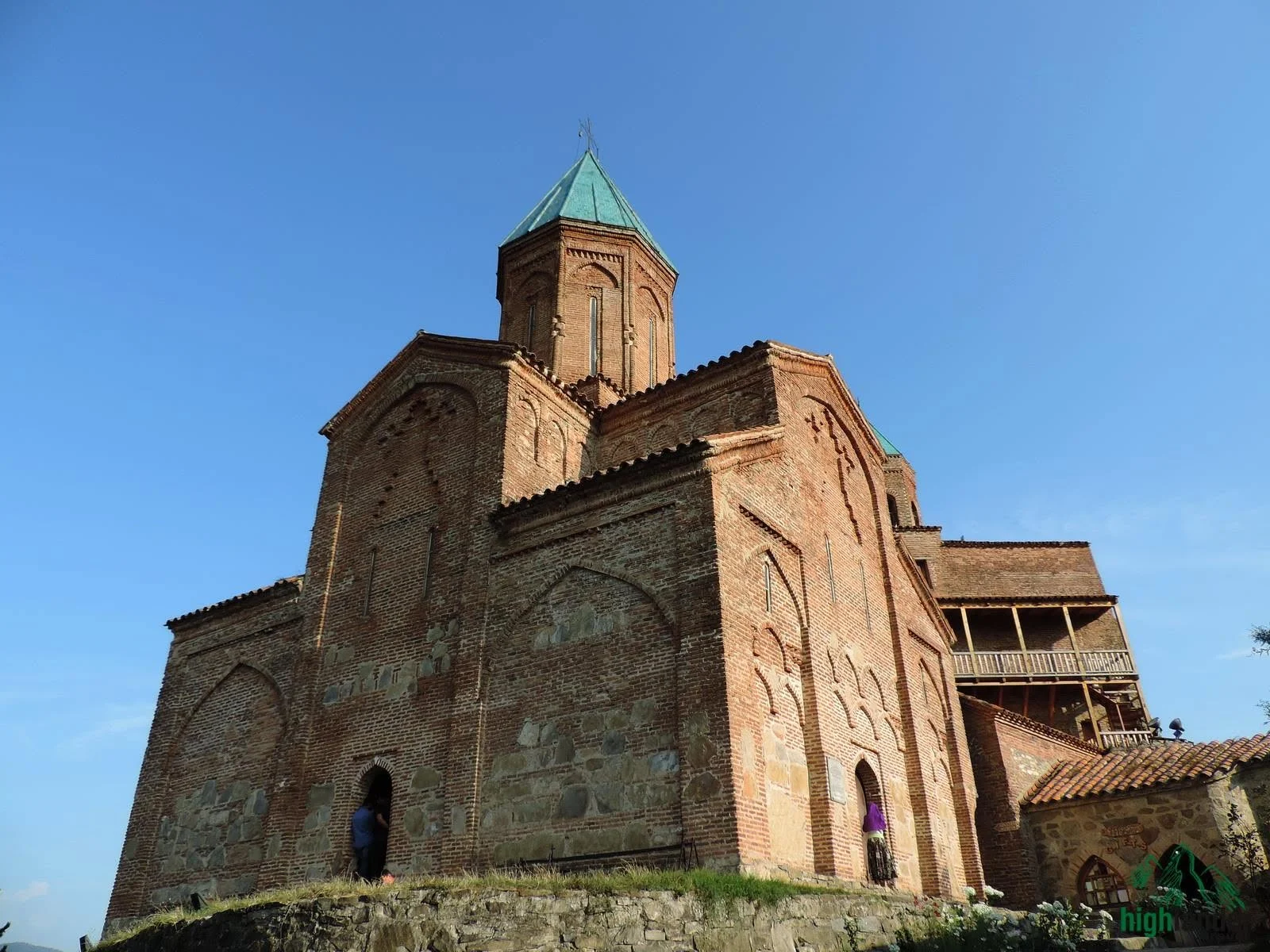
- Gremi, the capital that was erased — royal seat of Kakheti from 1466 until Shah Abbas destroyed it in 1616. The Archangels’ church of 1565 and the royal tower survive; the town that surrounded them is under the fields, and you can see the outline from the hill.
- Ikalto’s academy — founded in the sixth century, expanded into a teaching academy in the twelfth under David the Builder, and burned in the same 1616 campaign. Shota Rustaveli is said to have studied here.
- Stone wine presses and buried qvevri in a monastery yard — Ikalto taught winemaking as a subject, and the equipment is still lying in the grounds. It is the clearest thing in Georgia about how inseparable the church and the vineyard were.
- Ujarma fortress — a hilltop stronghold above the Iori with walls dating back to the era of Vakhtang Gorgasali, a royal residence until the Arab invasions of the eighth century.
- Sighnaghi’s town wall — four and a half kilometres of it, twenty-three towers, built in 1762 under Erekle II by people who had watched what happened to Gremi.
- The Alazani valley from the ridge — vineyards to the horizon and the wall of the Greater Caucasus standing behind them.
- Almost no other tourists at three of the four stops. Ujarma, Ikalto and Gremi are quiet on most days of the year.
- Private car and driver-guide — your group only, and the pace is yours.
Step by step
Tour itinerary
Around eleven hours door to door and roughly 400 kilometres, so about six of those hours are driving. Four stops, and the route is a loop through the whole of Kakheti rather than an out-and-back.
09:30 — Pickup in Tbilisi
Collected from your hotel or apartment. The road runs east out of the city towards the Iori valley.
10:30 — Ujarma Fortress
Forty minutes. The walls sit on a hill above the river with forest on three sides, and enough of the towers and curtain remain to read the layout. This was a royal residence and a customs point on the road east; the Arabs took it in the eighth century and it never recovered its importance. There is a small church inside the walls. You will very likely have the place to yourselves.
12:00 — Ikalto Monastery and Academy
An hour. A quiet walled compound under enormous cypresses, with three churches and the burnt shell of the academy building. The academy taught theology and rhetoric alongside pottery, metalwork and winemaking, which tells you something about what a Georgian monastery was for. In the grounds you will find stone presses and qvevri sunk into the earth, still where they were used. Shota Rustaveli, who wrote Georgia’s national epic, is traditionally said to have been a student here.
13:15 — Gremi
An hour and a quarter. The Archangels’ church of 1565 stands on its hill with the royal tower beside it, and from the top you look out over the fields where the rest of the capital used to be — a merchants’ quarter, a caravanserai, baths, the whole apparatus of a Silk Road town of fifty years’ standing. The tower now holds a small museum with finds from the site. Shah Abbas I ended the place in 1616 and it was never rebuilt.
14:45 — South to Sighnaghi
About an hour and a quarter through the vineyard country of the Alazani valley, with the mountains on your left the whole way.
16:00 — Sighnaghi
Two hours, including a late lunch. The town is small, steep and cobbled, with balconies leaning over the streets and a fortress wall you can climb onto and walk. From the towers the Alazani valley opens out below with the Greater Caucasus behind it — the view that puts Kakheti on postcards. There is time to eat properly and still walk a stretch of the wall.
18:00 — Return to Tbilisi
Around two hours west, arriving between 19:45 and 20:15.
Starting from
€150
per person
Locally operated since 2011
We reply within 24 hours
What your price covers
What’s included
Included
- Private air-conditioned vehicle for your group only
- English-speaking driver-guide for the full day
- Hotel or apartment pickup and drop-off in central Tbilisi
- Entry to Ujarma, Ikalto and Sighnaghi — all free
- The Gremi museum ticket
- Fuel, parking and road costs
- Bottled water in the car
- All taxes and booking fees
Not included
- Lunch in Sighnaghi — around 25–45 GEL per person
- A wine tasting, which is not part of this tour — see our organic wine tour if that is what you are after
- The Sighnaghi Museum, if you want to see its Pirosmani paintings — a small fee at the door
- Travel insurance
- Tips for your driver-guide
- Personal expenses and souvenirs
Photographs
Gallery

Where you’ll go
Map & route
Tbilisi — city centre
Ujarma Fortress
Ikalto Monastery
Gremi Citadel
Sighnaghi
Practical details
Good to know before you go
Which of our Kakheti tours is the right one?
We run three days in this region and they are genuinely different. Take the wrong one and you will have a fine day that was not the day you wanted, so here is the honest comparison.
| Tour | Take it if | Skip it if |
|---|---|---|
| This one — Kakheti in one day | You want history, fortresses and ruins, and you like a place better when nobody else is there | You dislike long drives, or you came to Georgia for the wine |
| Organic wine tour in Kakheti | You want three small qvevri producers, twelve to fifteen wines and a proper Kakhetian lunch | You want to see the region rather than drink it |
| David Gareja and Sighnaghi | You want the desert monastery and the walled town, and only one of those is Kakheti | You have already seen Sighnaghi |
There is nothing stopping you doing two of them on separate days — plenty of guests do the wine tour and this one back to back, and they overlap only at Sighnaghi.
About the driving
This is the longest single day we run outside the mountains: roughly 400 kilometres and about six hours in the vehicle, split into four legs. None of the legs is more than about two hours, the roads are good tarmac throughout, and the countryside between the stops is genuinely worth looking at. But if long car days are not for you, say so and we will suggest something else — we would rather lose the booking than have you spend eleven hours wishing you had.
Dress code
Ikalto is a working monastery and Gremi’s church is consecrated. Shoulders and knees covered; women need a skirt and a headscarf. These are small rural sites where coverings are not reliably available at the door, so bring your own.
What to bring
- Shoes with grip. Ujarma and Gremi are ruins on hills, with uneven steps and loose stone.
- Sun protection. Ujarma and Gremi both sit on exposed hilltops with no shade.
- A scarf or wrap for the churches.
- Cash in lari for lunch and the Sighnaghi museum.
- A layer. The Alazani valley is warm; the hilltops catch the wind.
When to go
| Season | Conditions | Worth knowing |
|---|---|---|
| April – June | Green, mild, the valley at its best | The strongest window; wildflowers on the fortress hills |
| July – August | Hot, 32–38°C, no shade on the ruins | An earlier start helps; Sighnaghi is busiest now |
| September – October | Warm, clear, harvest across the whole valley | The drives are at their most beautiful — the vineyards are being picked |
| November – March | Cold and often grey; ruins can be muddy | You will have Ujarma, Ikalto and Gremi entirely to yourself |
Walking and accessibility
Two to three kilometres in total. Ujarma and Gremi both involve a climb on uneven ground; Ikalto is flat; Sighnaghi is cobbled and steep. For visitors with limited mobility, Ikalto and the lower part of Sighnaghi work while the two fortresses do not — tell us in advance and we will plan around it honestly.
Children
Ujarma and Gremi are castles, which most children take to immediately. The driving is the limiting factor rather than the sites — around six hours of it — so bring something for the car and think hard before booking this one with anyone under about eight.
Booking
Book at least 24 hours ahead. Free cancellation up to 24 hours before departure. Child seats free on request.
From our travellers
Reviews
Before you book
Frequently asked questions
How long is this Kakheti tour?
Around eleven hours door to door, covering roughly 400 kilometres. About six hours of that is driving, split into four legs of one to two hours. It is the longest day we run outside the mountains, and we would rather tell you that now.
Is there a wine tasting on this tour?
No. This is a history and architecture day — fortresses, a medieval academy and a destroyed capital. If you want cellars and tastings, our organic wine tour in Kakheti is the one you want, and the two overlap only at Sighnaghi, so plenty of guests do both on separate days.
What is Gremi?
The capital of the Kingdom of Kakheti from 1466 until Shah Abbas I of Persia destroyed it in 1616. It was a walled Silk Road trading town with a royal palace and a merchants’ quarter. What survives is the Archangels’ church of 1565 and the royal tower; the rest of the town lies under the fields around them and was never rebuilt.
Why is Ikalto important?
It was founded in the sixth century by Zenon of Ikalto, one of the Thirteen Assyrian Fathers, and grew into one of Georgia’s two great medieval academies under David the Builder in the twelfth century. It taught theology and rhetoric alongside practical crafts, winemaking among them — the stone presses and buried qvevri are still in the grounds. It burned in the same Persian campaign that ended Gremi.
Did Shota Rustaveli really study at Ikalto?
Tradition says so, and it is repeated everywhere in Georgia. There is no documentary proof, and no serious historian will state it as fact. It is a good story about a real place, which is a fair description of a lot of Georgian history.
Are there entrance fees?
Ujarma, Ikalto and Sighnaghi are free. The Gremi museum charges a small ticket, and that is included in your price — there is nothing to pay at the door.
Will it be crowded?
Not at the first three stops. Ujarma, Ikalto and Gremi see very few visitors on most days of the year, and in winter you will often be alone at all three. Sighnaghi is busy in summer, particularly at weekends.
Is the tour suitable for children?
The sites are — Ujarma and Gremi are castles, and children generally love them. The driving is the problem: six hours is a lot for a small child. From about eight upwards it works if you bring something for the car.
How much walking is involved?
Two to three kilometres in total. Ujarma and Gremi involve climbs on uneven ground with loose stone and steps; Ikalto is flat; Sighnaghi is cobbled and hilly. Wear shoes with grip.
Is the tour private?
Yes. Your own vehicle, your own driver-guide, your own pace. The per-person price falls as the group grows, because the cost of the car is shared between more people.
Ready when you are
Tell us your dates and how many of you are travelling. We’ll come back within 24 hours with availability, a confirmed price, and your guide’s name.