Almost everyone who walks in Svaneti walks the same four days: Mestia to Ushguli. It is famous for good reason and we sell it too. But it starts at the bus stop in Mestia, and the best three days in this region happen a valley to the west, before that trail begins.
This is the eight-day version. You start in Becho, under Ushba.
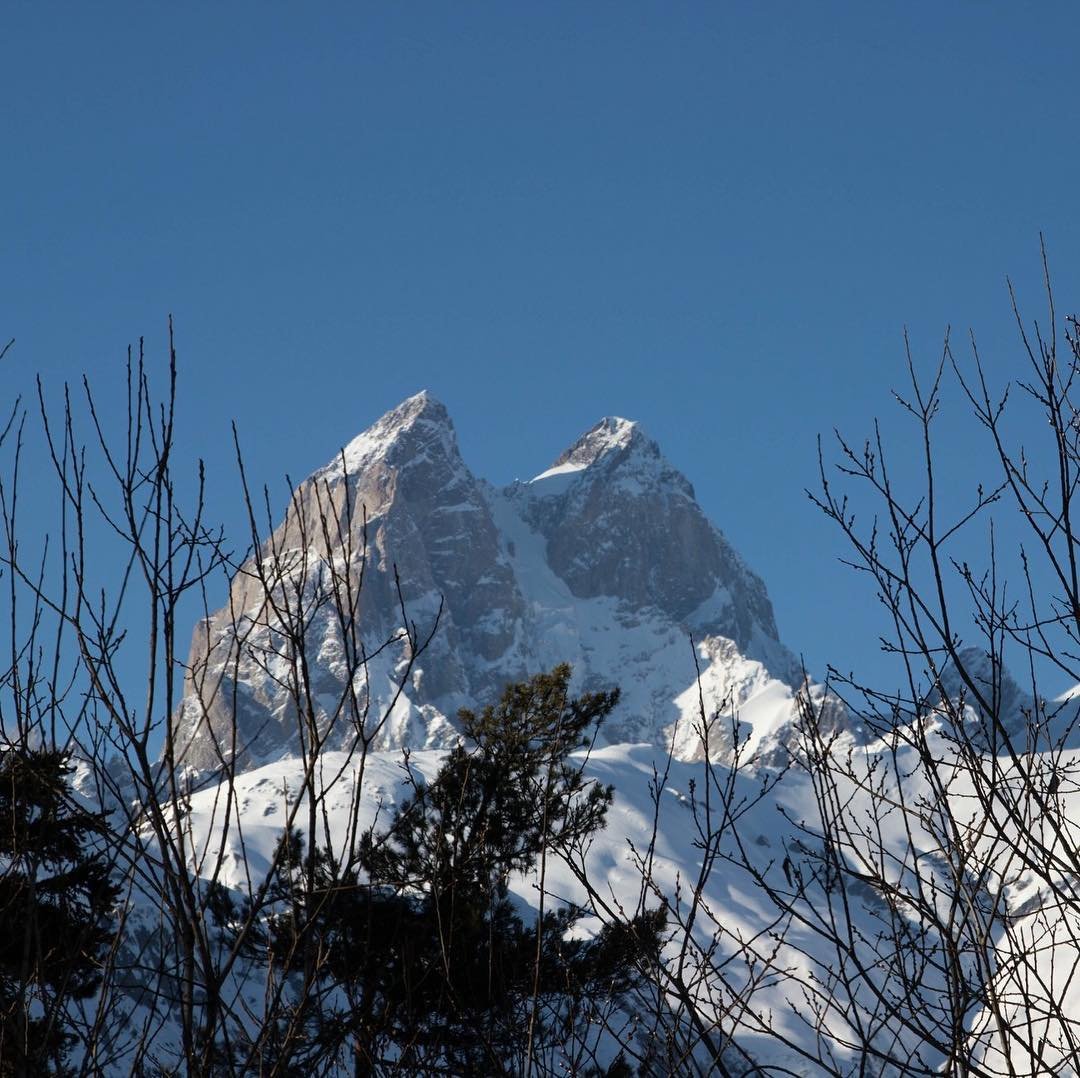
Ushba is 4,710 metres and it looks wrong — two heads on one mountain, sheer on every side, the peak Georgian climbers talk about the way British climbers talk about the Eiger. You spend a full day walking up the Dolra valley towards it: pine forest, then the Shdugra waterfalls coming off the wall in half a dozen strands at once, then meadow, then boulders, and finally the moraine at the foot of the glacier with the mountain three thousand metres straight up in front of you. There is a memorial there to climbers who did not come back, which tells you what you need to know about the place.
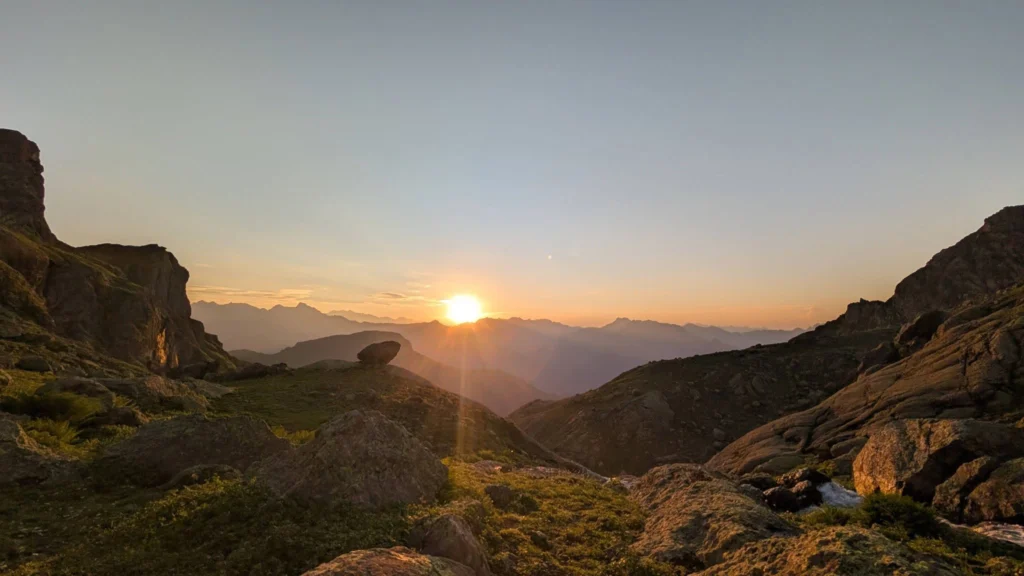
Then the third day, which is the one people remember. Fourteen hundred metres up out of the Gulichala valley to the Guli Pass at 2,960 metres — the highest point of the trek and, by a distance, the best view in Svaneti. Ushba behind you, Tetnuldi and its glaciers east, Mount Laila south, and the whole Mulakhi valley running away below towards Mestia. Then fourteen hundred and sixty metres down the other side into town, a hot shower and a rest day.
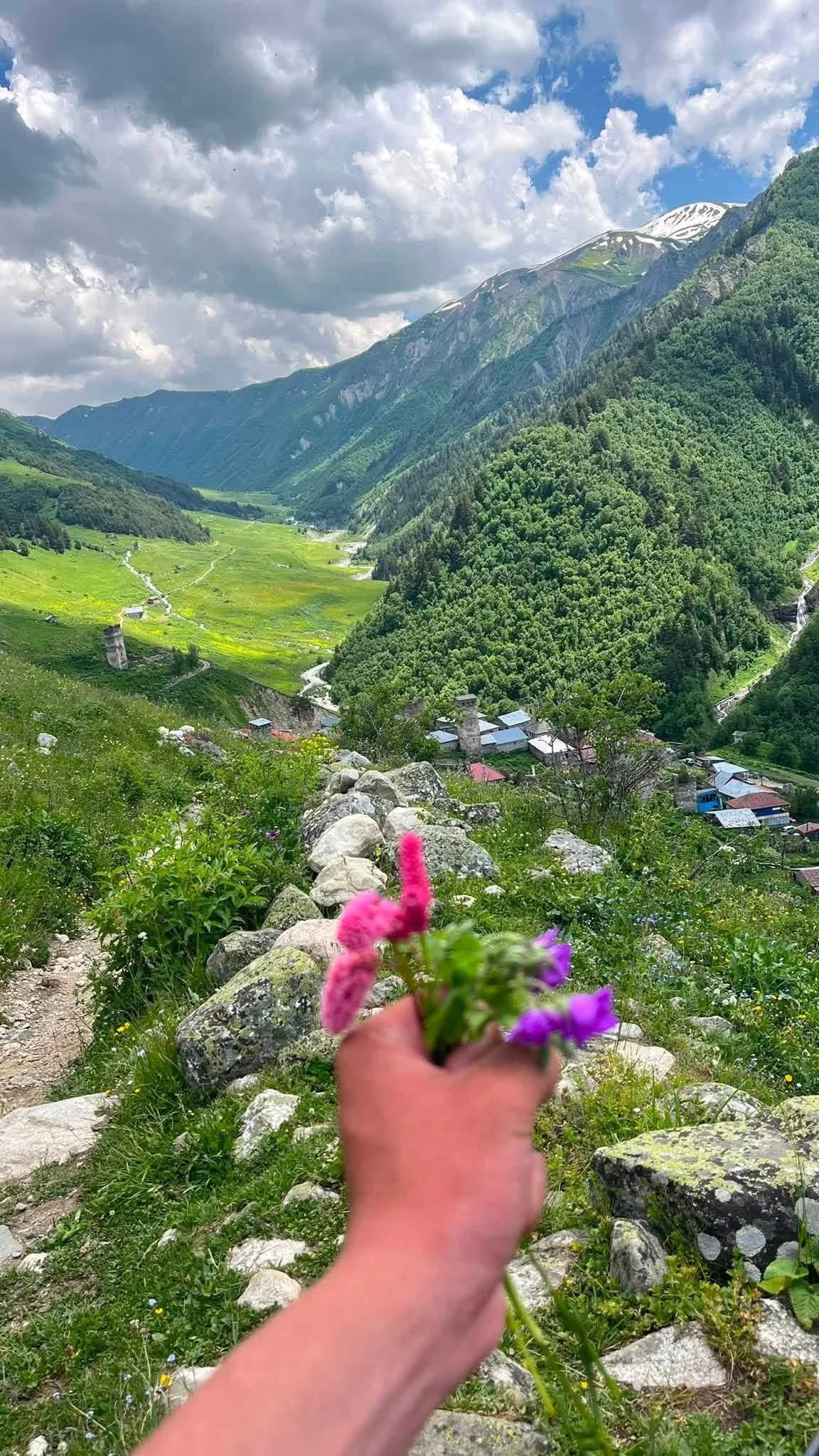
After that the classic route takes over and you already know how good it is: Zhabeshi, Adishi where no road reaches, the glacial river you wade on the seventh morning, the Chkhunderi Pass, and finally Ushguli at 2,200 metres with Shkhara — Georgia’s highest mountain at 5,193 metres — filling the head of the valley behind the towers.
Eighty-five kilometres, two passes, six walking days and a bed in somebody’s family house every single night. You walk from the foot of one of Georgia’s great mountains to the foot of the other.
Book this if you have done multi-day trekking before, you can manage twelve to eighteen kilometres a day on mountain ground six days out of eight, and a thousand-metre climb does not put you off. Don’t book it if this would be your first long trek — take the 4-day Mestia–Ushguli route instead, which is the same country without the Guli Pass.
One thing to plan for: the price covers Becho to Mestia and nothing else. Getting to the trailhead and home again is separate — we quote it, and the figures are further down the page.
What you’ll see
Tour highlights
- The Guli Pass, 2,960 m. The high point of the trek and the finest single day of walking in Svaneti. Ushba’s double summit north, Tetnuldi’s glaciers east, Laila south, and the Mulakhi valley opening below you towards Mestia. An optional half-hour up Mount Gul from the col if your legs are still willing.
- The foot of Ushba, 4,710 m. A full day up the Dolra valley to the moraine below the glacier, with the mountain rising three kilometres above you. The most dramatic peak in Georgia and the one almost no trekking itinerary reaches.
- The Shdugra waterfalls. Several streams coming down the mountainside side by side at once, on the way up to the glacier. Worth the stop even though the day is long.
- The Adishi river crossing. Glacial meltwater, knee to thigh in normal conditions, and the thing everyone photographs. Four minutes and a story. If it runs high, a man from the village ferries you across on a horse for about 20 GEL.
- The Chkhunderi Pass, about 2,740 m. The second crossing, with Shkhara’s glacier filling the eastern sky and the main Caucasus ridge running off both ways.
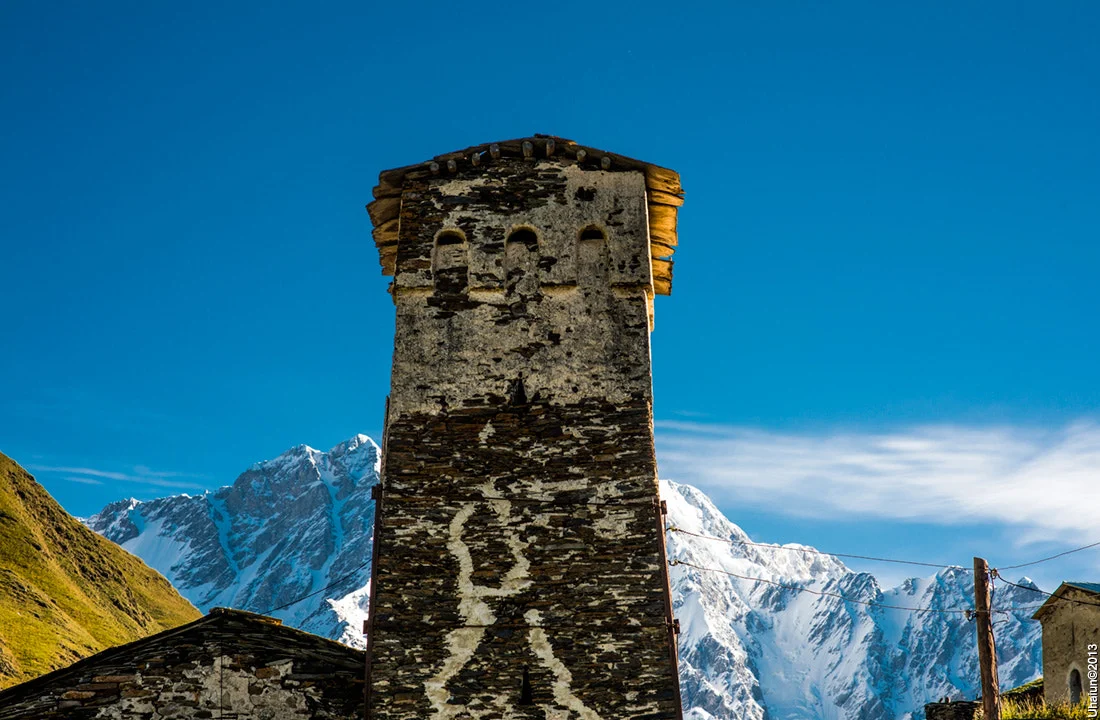
- Ushguli. Four hamlets at 2,200 metres, one of the highest continuously inhabited places in Europe, UNESCO-listed, with towers standing in green meadow and Shkhara at 5,193 m behind them.
- Adishi. No road reaches it — a trail and a rough 4×4 track, and that is all. The tenth-century church of St George with its frescoes is a short walk from the guesthouses.
- A rest day in Mestia. Halfway, with a hot shower, restaurants, the Zuruldi cable car, the Svaneti museum and the Chalaadi glacier if you still want to walk.
- Five villages, five guesthouses. Becho, Mestia, Zhabeshi, Adishi and Iprali — each with its own cooking, its own towers and its own family.
- Ushba to Shkhara on foot. Georgia’s two great mountains, one at each end of the walk. Nothing else in the country joins them.
Step by step
Tour itinerary
Day 1 · Arrival in Becho
Transfer day · about 5 hours from Zugdidi, 8–9 from Tbilisi · guesthouse in Mazeri, Becho
The drive up is a good introduction to the scale of the place. The road climbs out of the lowlands past the Enguri dam — one of the highest arch dams in the world, and worth looking up from the car — and then into Upper Svaneti proper, where the valleys narrow and the tops go white.
Becho is a scatter of villages under Ushba, and it is quieter than Mestia by some distance. Your guesthouse in Mazeri gives you the first proper look at the mountain, which will be in front of you for the next two days. The evening is yours: the village, the mineral springs, and a first Svan dinner that will be larger than you expect.
Day 2 · Shdugra waterfalls and the Ushba glacier
About 14 km there and back · 6–8 hours · +800 m / −800 m · guesthouse in Mazeri
Up the Dolra valley, gently at first, through pine forest and out into meadow. The Shdugra waterfalls come first — several streams falling side by side down the same face, which is not something you see often.
Past them the ground turns serious: young forest, then boulder-strewn meadow, then moraine, and finally the foot of the Ushba glacier with the mountain going up three thousand metres in front of you. There is a memorial here to climbers who died on it. It is a quiet spot and most people stay longer than they meant to.
Back down the same way to Becho for dinner and an early night — tomorrow is the big one.
Day 3 · Becho to Mestia over the Guli Pass
16 km · 7–8 hours · +1,410 m / −1,460 m · max 2,960 m at the Guli Pass · guesthouse in Mestia
The best day of the trek, and the hardest.
The morning is a long steady climb up the Gulichala valley with Ushba over your shoulder getting no smaller. Fourteen hundred metres of it, and it does not let up much. Then the col.
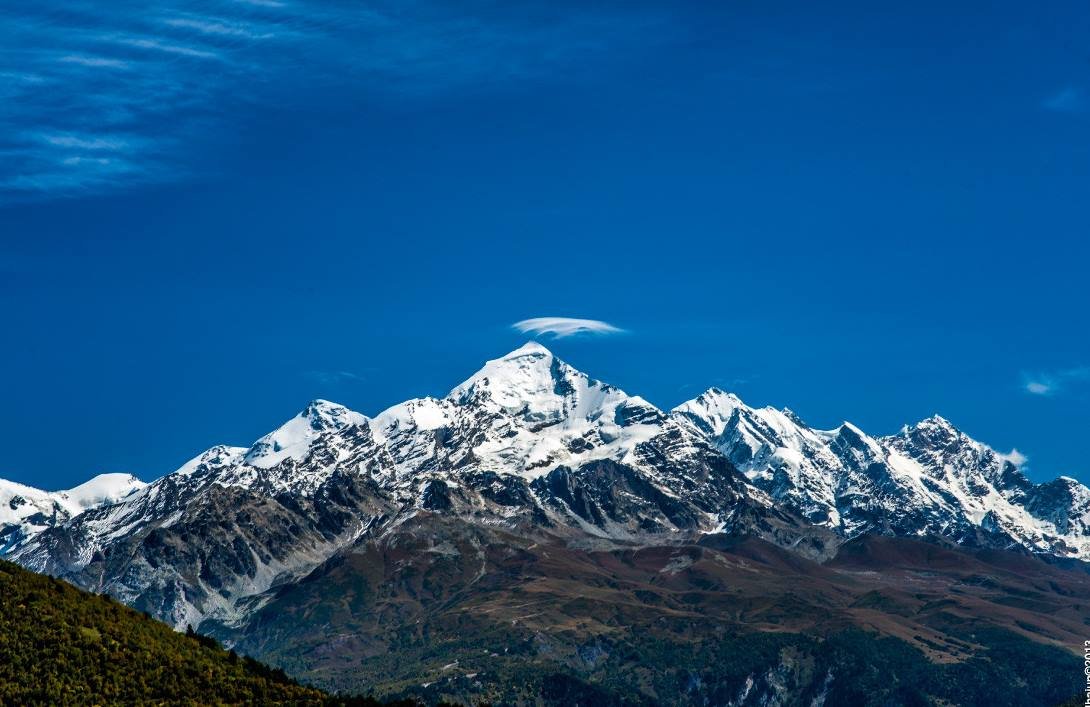
The Guli Pass at 2,960 m is the highest point of the eight days and the view is the reason people book this itinerary rather than the shorter one. Ushba’s two heads fill the north. Tetnuldi and its glaciers are east. Mount Laila stands to the south, and the Mulakhi valley runs away below towards Mestia. On a clear day there are eagles working the thermals off the ridge, at eye level. An optional half hour up Mount Gul from the pass opens it out further.
Then down: along a ridge and into flower meadow, fourteen hundred and sixty metres of descent into Mestia. It is a long way on the knees and this is the day trekking poles earn their weight. You arrive in the main town of Upper Svaneti with restaurants, hot water and a proper bed.
Day 4 · Rest day in Mestia
No walking required · guesthouse in Mestia
Earned. Mestia is a small town with towers standing between the modern buildings, and there is enough to fill a day without walking far.
Options: the Zuruldi cable car for a panorama of the range with no effort at all; the Svaneti History and Ethnography Museum, which is genuinely good and holds icons and manuscripts from the churches around the region; the Margiani tower house, which shows how a Svan family actually lived inside one of these things. For a half day on foot, the walk out to the Chalaadi glacier.
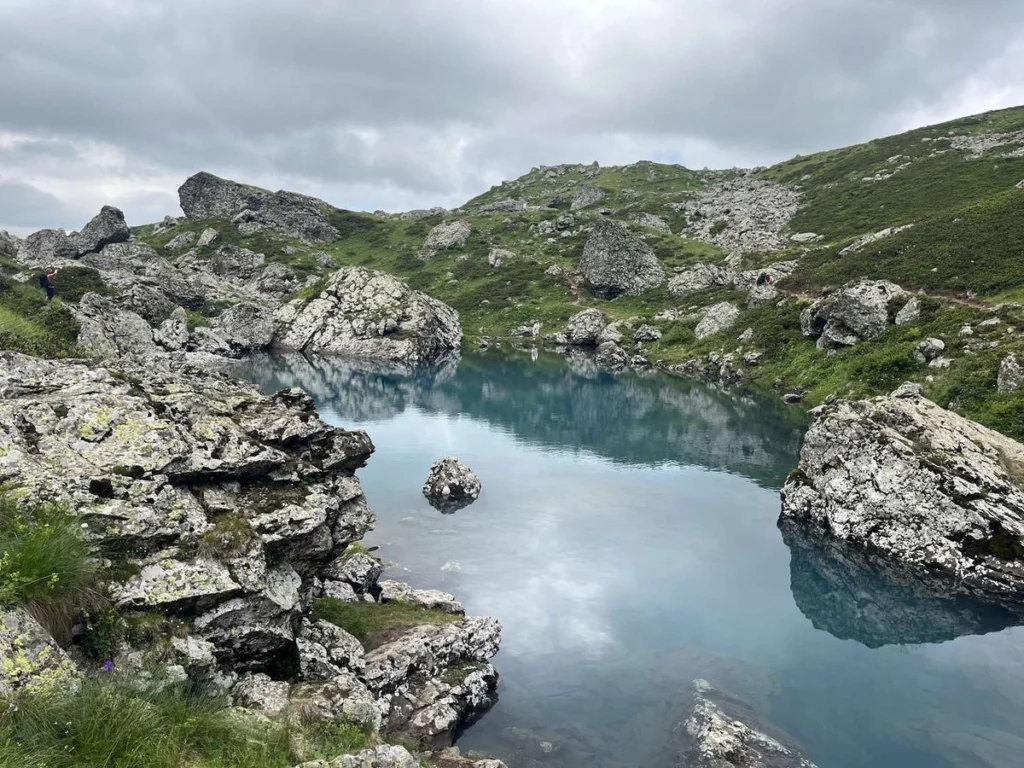
If you want more than that, the Koruldi lakes sit high above the town with Ushba and Tetnuldi behind them — a 4×4 covers part of the way. But there are four walking days to come, and most people spend the afternoon in a cafe and are glad they did.
Day 5 · Mestia to Zhabeshi
12 km · 5–6 hours · +400 m / −100 m · guesthouse in Zhabeshi
The classic route starts here, and it starts kindly — a well-marked trail up the Mulakhi valley with almost no climbing in it, which is what your legs want after Guli.
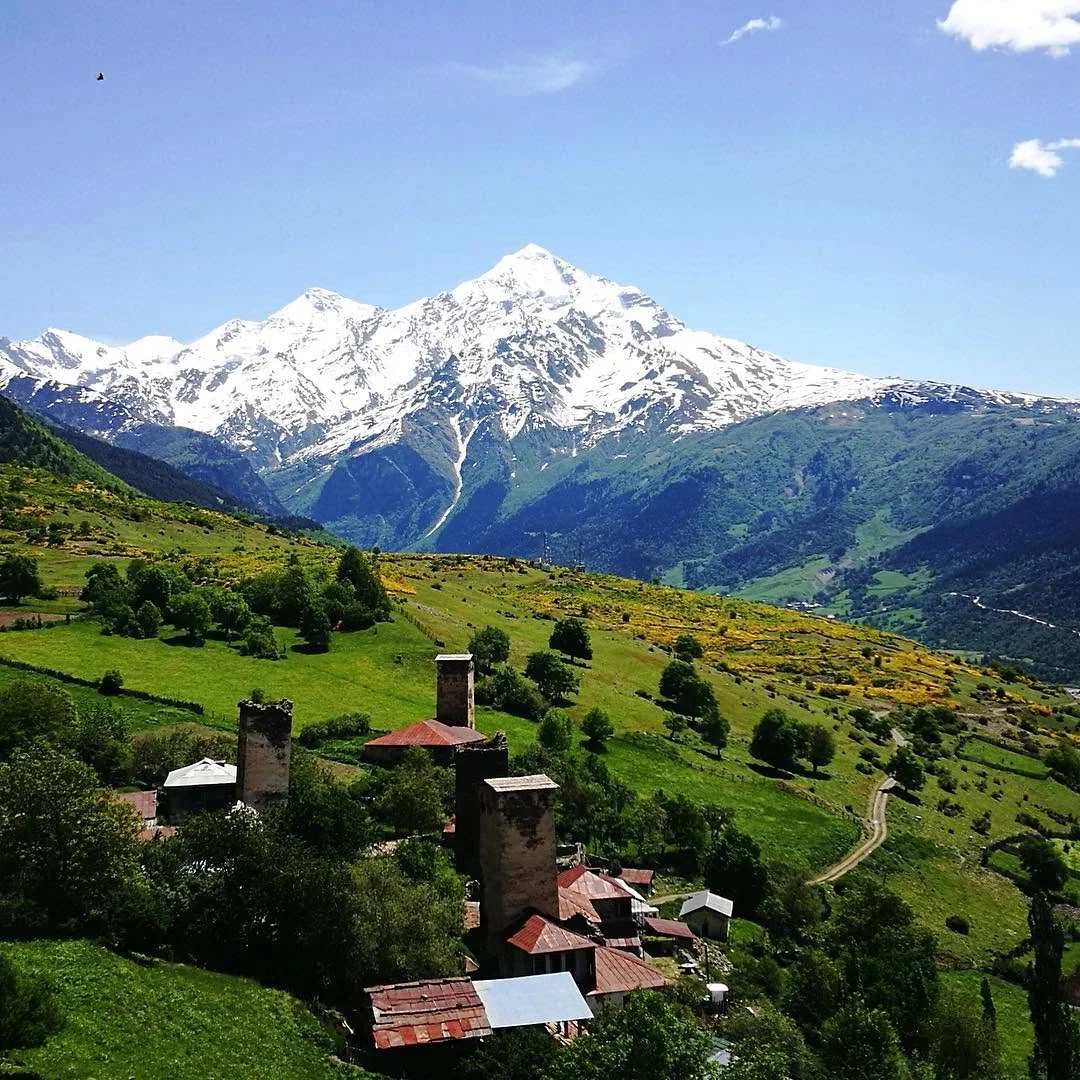
Ushba appears again behind you and Tetnuldi begins to take over ahead. The path threads through Lakhiri and Tskhumar, each with towers standing over the wooden houses, before reaching Zhabeshi in the afternoon.
Dinner is the reason to arrive hungry: kubdari, spiced meat baked inside bread and better in Svaneti than anywhere else in Georgia, and tashmijabi, cheese beaten into potato until it stretches. Your host will refill the plate whether or not you asked.
Day 6 · Zhabeshi to Adishi
12 km · 5–7 hours · +650 m / −400 m · guesthouse in Adishi
A climb out of Zhabeshi to a high point, then down into the Adishischala valley with Tetnuldi (4,858 m) in front of you the whole way and the Adishi glacier coming into view at the head of it.
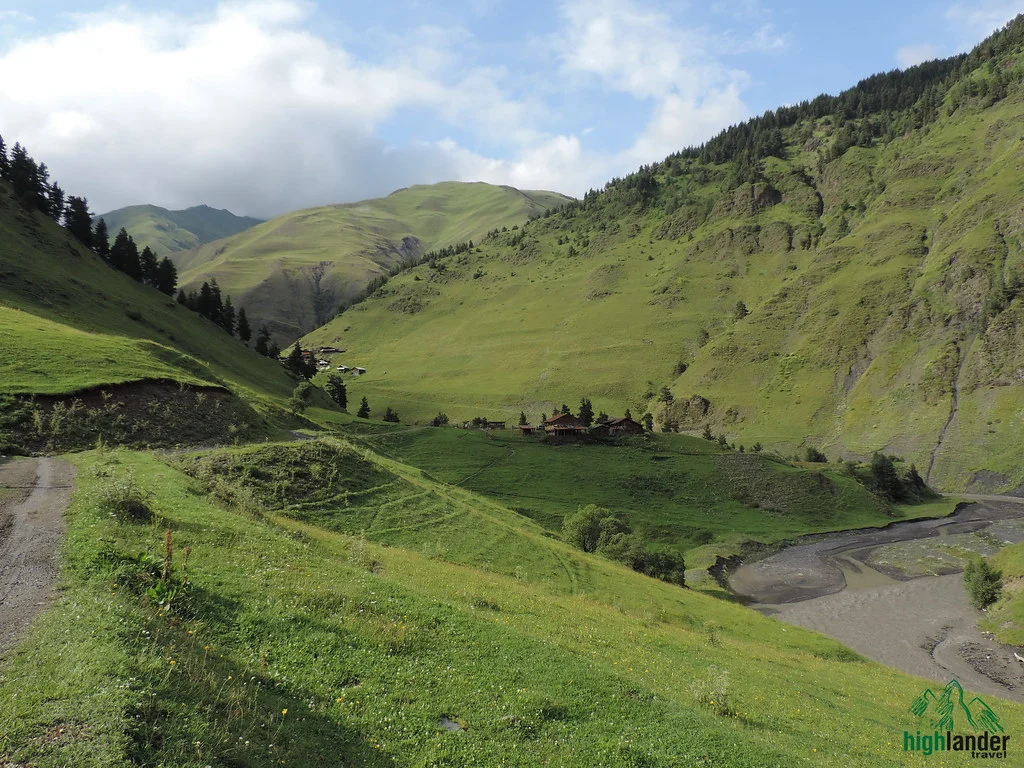
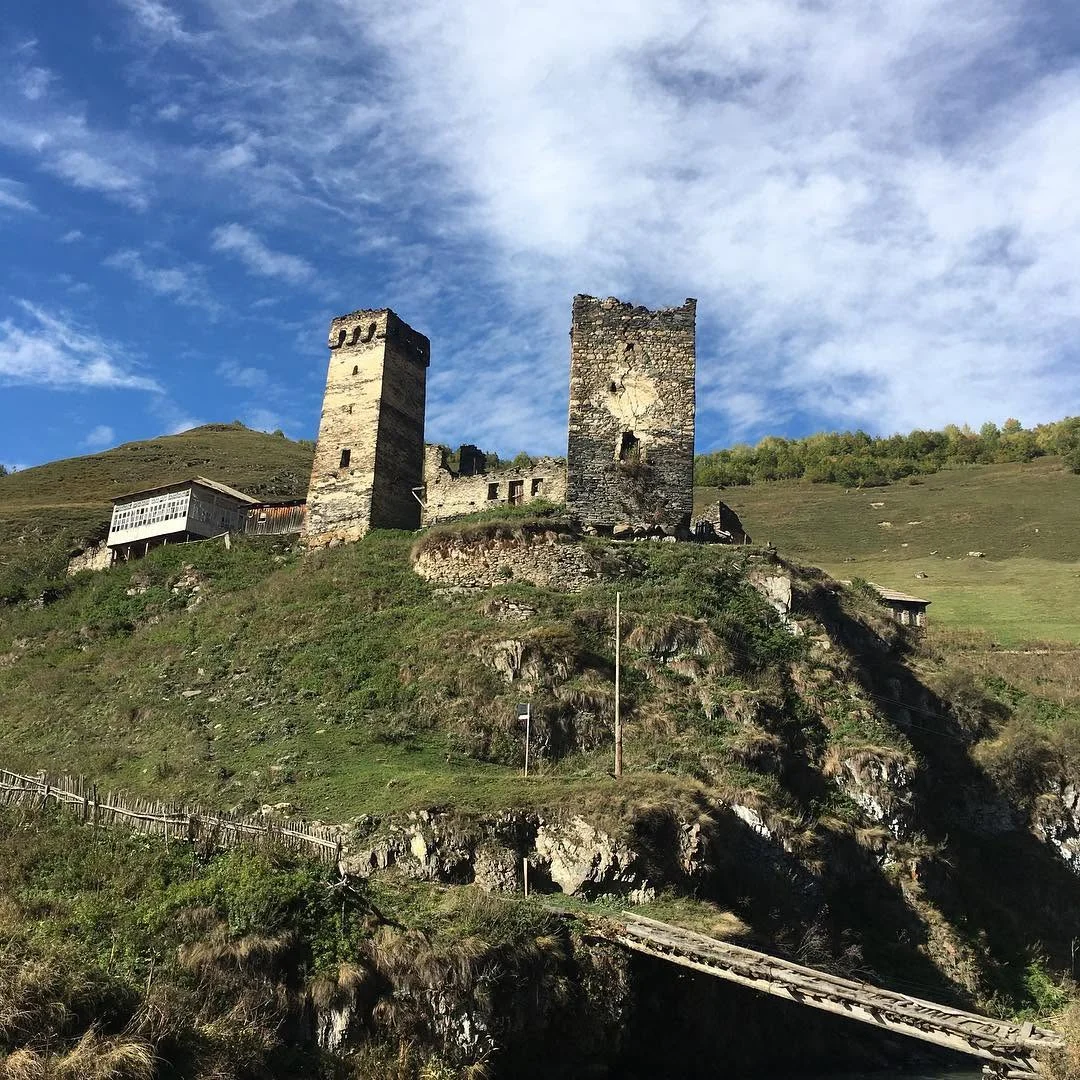
Adishi is the reason to walk this route rather than drive any of it. No road reaches the village — only this trail and a rough track — and it has kept something the more accessible Svan villages have lost. The tenth-century church of St George is a few minutes from the guesthouses and has frescoes behind a very plain door; ask, and someone will open it.
Day 7 · Adishi to Iprali over the Chkhunderi Pass
18 km · 7–9 hours · +950 m / −960 m · max about 2,740 m · guesthouse in Iprali
The longest day, and it opens with the bit everyone has been thinking about since they booked.
The Adishi river is glacier melt, it runs fast, and in normal summer conditions it comes somewhere between your knee and your thigh. It is cold and it takes about four minutes. Poles help and so does taking your time over foot placement. Its reputation is larger than the crossing. If the water is high — early season, or after heavy rain — a man from the village will take you over on a horse for around 20 GEL, which is either an inconvenience or the highlight of your holiday depending on temperament.
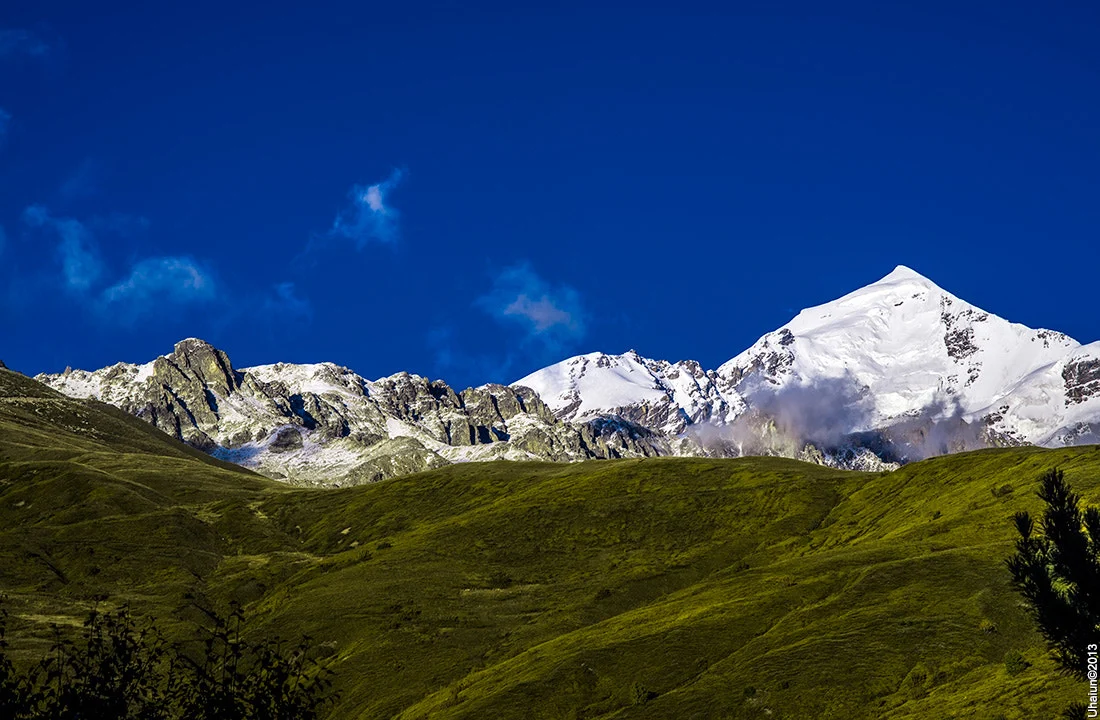
After that a steady climb through alpine meadow to the Chkhunderi Pass at about 2,740 metres. The view is a match for Guli and completely different: Shkhara‘s glaciers fill the east, Tetnuldi is north, and the main Caucasus ridge runs out in both directions.
Then a long descent through flower meadow to Iprali, with Ushguli getting closer all afternoon.
Day 8 · Iprali to Ushguli, and back to Mestia
12 km on foot · 4–5 hours, plus an optional glacier walk · then 2–3 hours by 4×4 to Mestia
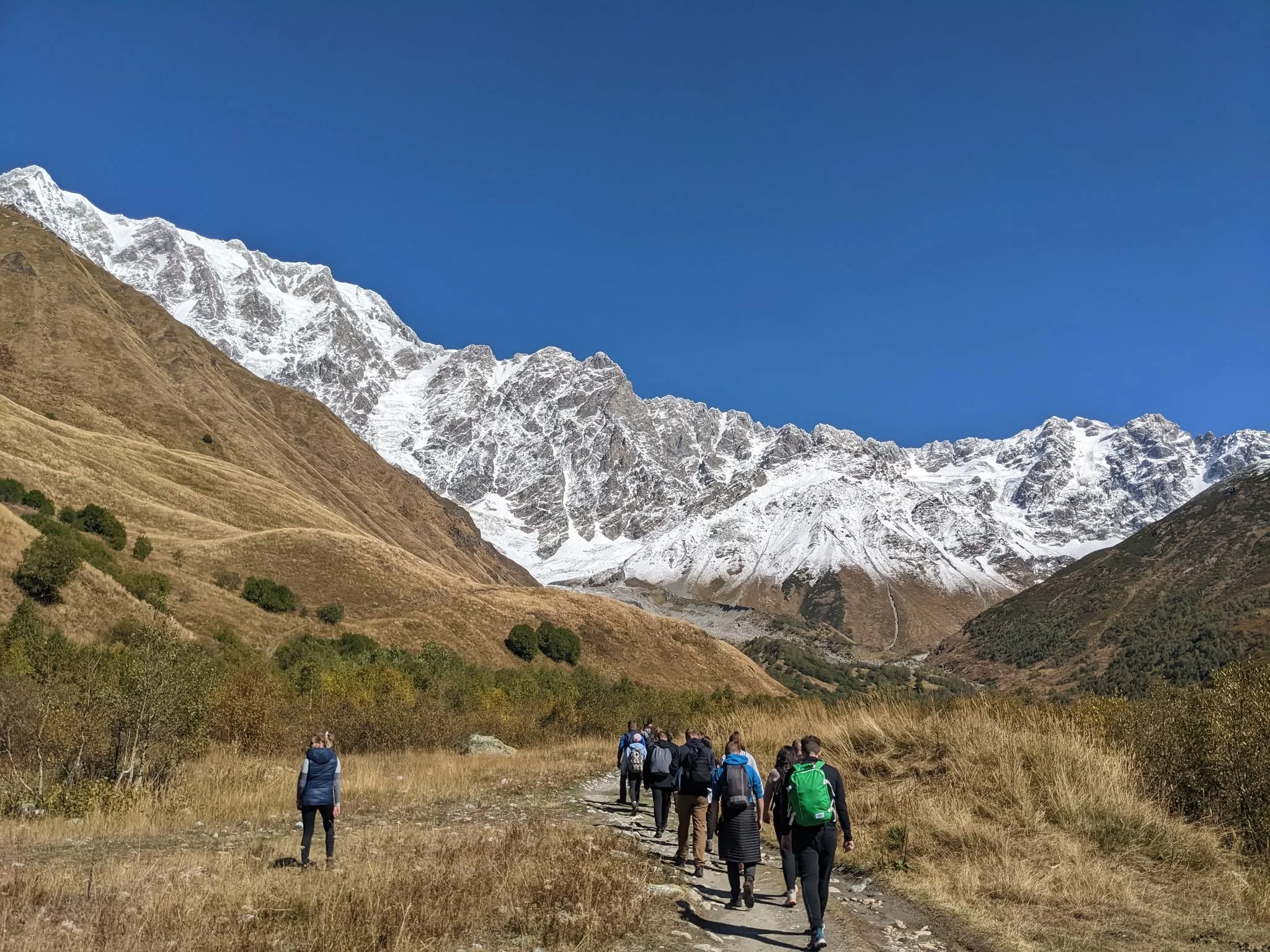
The last walking day follows the Enguri upstream with Shkhara at 5,193 m growing all morning until its glacier — one of the biggest in the Caucasus — fills the whole head of the valley.
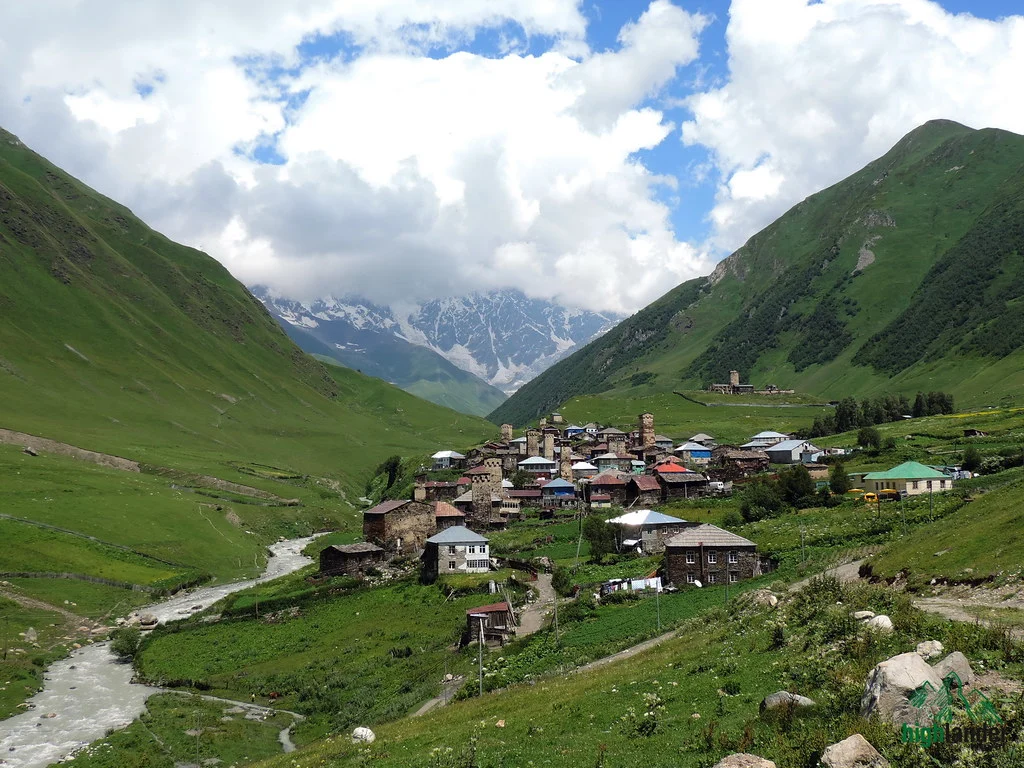
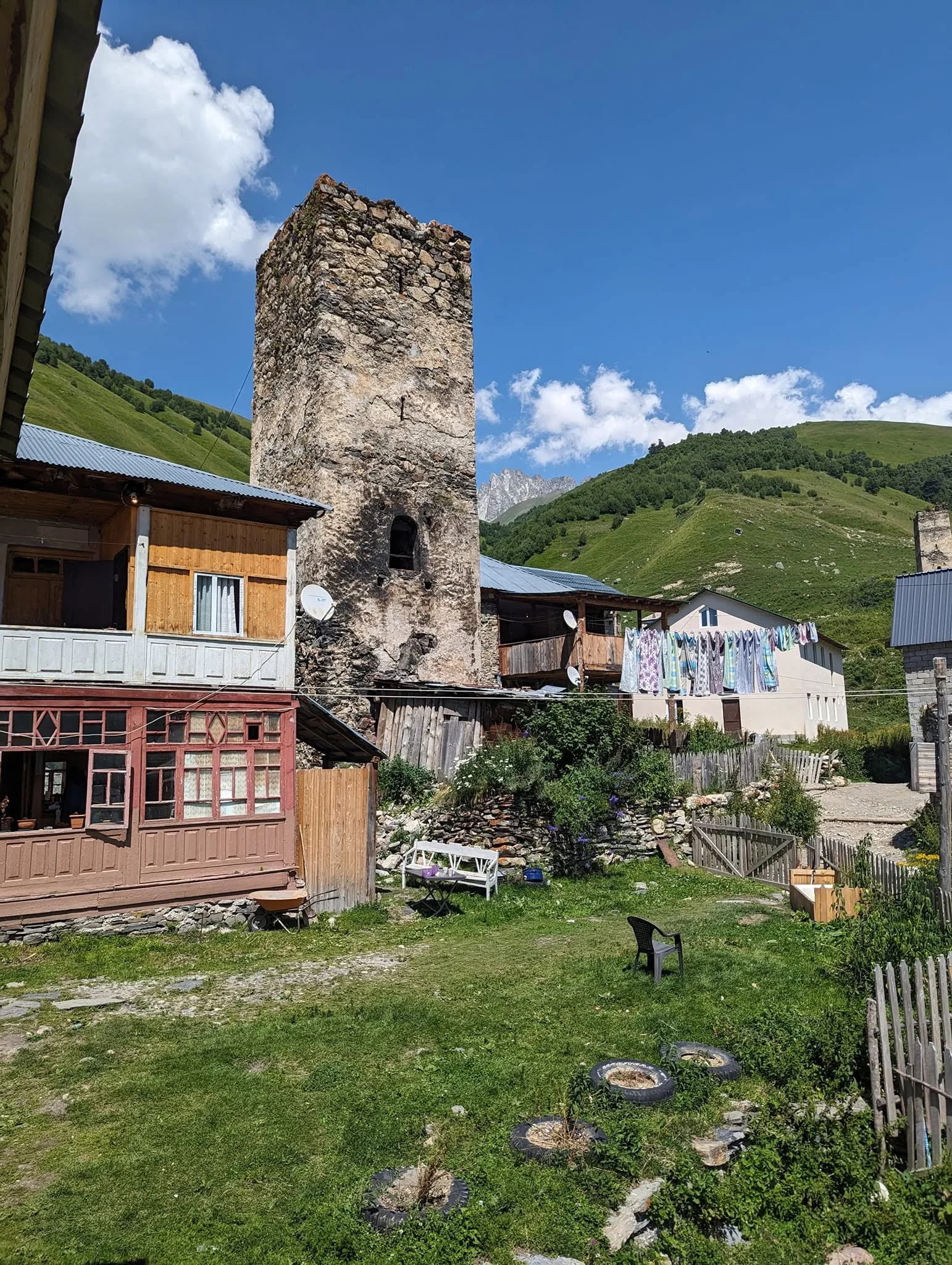
Ushguli is four hamlets at 2,200 metres: Murkmeli, Chazhashi, Chvibiani and Zhibiani. Towers standing in green meadow with the highest mountain in Georgia behind them, cows in the lanes, and a UNESCO listing it deserves. There is time to walk up to the Lamaria church above Zhibiani, to look properly at the tower cluster at Chazhashi, or to keep walking towards the Shkhara glacier if you have anything left.
Then a 4×4 down the Enguri road back to Mestia — rough, slow and spectacular — where the trek ends, eight days and eighty-five kilometres from the mountain you started under.
Starting from
€1,200
per person
Locally operated since 2011
We reply within 24 hours
What your price covers
What’s included
Included
- Licensed English-speaking mountain guide for all eight days
- Seven nights’ accommodation in family guesthouses, twin or double rooms
- All meals: seven breakfasts, eight packed lunches, seven dinners
- 4×4 transfer from Ushguli back to Mestia on the final day
- All entry fees and permits
- Route planning and local knowledge that does not come from a map
Not included
- Getting to Becho and home from Mestia. This trek starts and finishes in Svaneti, not in Tbilisi. We quote transfers and the prices are in Practical Information below — budget for them
- Travel insurance — required, covering trekking to 3,000 m. We check it before departure
- Luggage transport between villages — $350 per vehicle if you want it, though most people leave a bag in Mestia
- Personal trekking gear: boots, waterproofs, poles, headlamp
- Alcoholic drinks
- Tips for the guide and guesthouse hosts
- Personal expenses and souvenirs
Photographs
Gallery
Where you’ll go
Map & route
Enguri Dam
Mazeri, Becho Valley
Shdugra Waterfall
Mazeri, Becho Valley
Guli (Gulichala) Pass
Mestia
Zhabeshi
Adishi
Chkhunderi Pass
Iprali
Ushguli
Mestia
Practical details
Good to know before you go
Fitness — the honest version
This is a challenging eight-day trek. Six of the days are walking days of twelve to eighteen kilometres on mountain ground, and two of them cross high passes. Day 3 is the test: about 1,410 metres of ascent to the Guli Pass at 2,960 m and 1,460 metres of descent afterwards, in seven to eight hours. Day 7 is the longest: 18 kilometres, the Adishi river crossing, and the Chkhunderi Pass.
If you can walk eight or nine hours over mountainous ground on consecutive days, you will manage. Previous multi-day trekking experience is strongly recommended, and if you have not done one, the 4-day Mestia–Ushguli route is the right place to start.
When to come
| Period | What you get |
|---|---|
| Late May – June | Wildflowers at their best and very few other trekkers. Higher rivers from snowmelt, and snow can still sit on the passes. The Adishi crossing is at its most difficult |
| July – August | The warmest and most settled weather, and the best conditions for both passes and the river. Peak season — guesthouses fill, so book early |
| September – October | Crowds thin sharply, autumn colour comes in, weather stays stable and nights get cold. Many experienced trekkers prefer it |
Where you sleep
| Nights | Where | What it’s like |
|---|---|---|
| 1–2 | Mazeri, Becho | Family guesthouse under Ushba, shared bathroom |
| 3–4 | Mestia | The one town on the route — private bathrooms available, restaurants, reliable hot water |
| 5 | Zhabeshi | Family guesthouse in a tower village |
| 6 | Adishi | No road reaches the village. Simple, and the best evening of the trek |
| 7 | Iprali | Family guesthouse, last night before Ushguli |
All are family-run. Expect shared bathrooms outside Mestia, hot water that varies, bedding provided, and cooking better than the description suggests: kubdari, khachapuri, tashmijabi, bread from the oven, and whatever the garden is producing. Vegetarian is straightforward with notice.
What to bring
Non-negotiable: broken-in waterproof boots, trekking poles, rain jacket, warm layers for the passes, sun protection, headlamp with spare batteries, two litres of water capacity, small first aid kit.
For the river: sandals or water shoes, and trousers you can dry.
Not needed: a sleeping bag — guesthouses provide bedding. A silk liner adds comfort and weighs nothing.
Pack light. You carry everything you bring, every day, unless you take the luggage transfer.
Luggage
Not included, and most people don’t need it: leave your main bag at your Mestia guesthouse and walk with a daypack. If you want your luggage moved village to village, we arrange it for $350 per vehicle, which covers a group of two to eight.
Getting to the trailhead
This is the one thing to plan properly, because the trek price does not include it.
| From | Private transfer, one way |
|---|---|
| Tbilisi | $320 |
| Batumi | $290 |
| Kutaisi | $220 |
| Zugdidi | $140 |
Prices are per minivan for up to six passengers, so they divide well across a group. Cheaper alternatives: the marshrutka from Tbilisi, Zugdidi or Kutaisi to Mestia and a taxi on to Becho; the overnight train to Zugdidi; or the small plane from Natakhtari or Kutaisi to Mestia, which is inexpensive and often cancelled for weather.
Insurance
Cover for trekking to 3,000 metres is a condition of joining, and we ask to see the policy. Make sure it includes emergency evacuation — parts of this route are several hours from a road, and standard holiday cover usually excludes altitude.
Group size
Two to twelve. Private departures for your group only; the price falls with group size and the table above shows how.
From our travellers
Reviews
Before you book
Frequently asked questions
How does this differ from the 4-day Mestia to Ushguli trek?
This adds the Becho valley at the start: the walk to the Ushba glacier, the Shdugra waterfalls, and the Guli Pass crossing at 2,960 m — which is the best single day of hiking in Svaneti and the reason to choose this version. You also get a rest day in Mestia halfway. The 4-day route is the second half of this one.
Is this harder than the 4-day route?
Yes, and not marginally. The Guli Pass day is more demanding than anything on the classic route — about 1,410 m of ascent and 1,460 m of descent in seven to eight hours. The rest day afterwards is there for a reason. Rated challenging, against moderate-to-challenging for the four-day version.
How dangerous is the Adishi river crossing?
Less than its reputation. In normal summer conditions it is knee-to-thigh deep glacial water and takes about four minutes with poles and careful footing. It is genuinely cold. In high water — early season or after heavy rain — villagers run a horse ferry for around 20 GEL. Your guide picks the crossing point.
What happens if the route is blocked?
Heavy rain can make the Adishi river unsafe, and early or late in the season a pass can hold snow or avalanche risk. Our guides are local and will find the safest way on — occasionally that means an extra vehicle at additional cost. Follow their call; on this ground it is not a negotiation.
What is the weather like?
Late May and June: cold nights, more rain, high rivers. July and August: warm days, cool evenings, and mountain weather that still does what it likes — carry waterproofs every day regardless. September: chilly nights, the most settled weather of the season. It can drop below freezing at the passes even in midsummer.
What do I need to bring?
Broken-in waterproof boots, trekking poles (not optional — you want them on the Guli descent and in the river), a rain jacket, warm layers, sun protection, headlamp, and two litres of water capacity. Sandals or water shoes for the crossing. You do not need a sleeping bag; the guesthouses provide bedding, though a silk liner is nice. Keep your passport and money on you rather than in Mestia.
Can the trek be extended to nine days?
Yes, by request. The usual additions are an extra day at Ushguli with a walk towards the Shkhara glacier, an extra night in Becho for more of the Ushba area, or simply a slower pace through the middle. Ask us and we will price it.
Can I camp instead of using guesthouses?
You can, and you would then carry a tent and a sleeping bag. Most people don’t, and not only for comfort — the guesthouses are where you actually meet Svaneti, and the cooking is a large part of what you came for.
Is travel insurance required?
Yes, and it must cover trekking to 3,000 metres. We ask to see it. Get a policy that includes emergency helicopter evacuation: several days of this route are hours from the nearest road.
Can I do only the Becho section?
Yes. Days 1 to 3 — Becho, the Ushba glacier and the Guli Pass into Mestia — work as a standalone three-day trek, with a 4×4 day trip to Ushguli tacked on if you want to see it. Contact us for the shorter version.
Ready when you are
Tell us your dates and how many of you are travelling. We’ll come back within 24 hours with availability, a confirmed price, and your guide’s name.