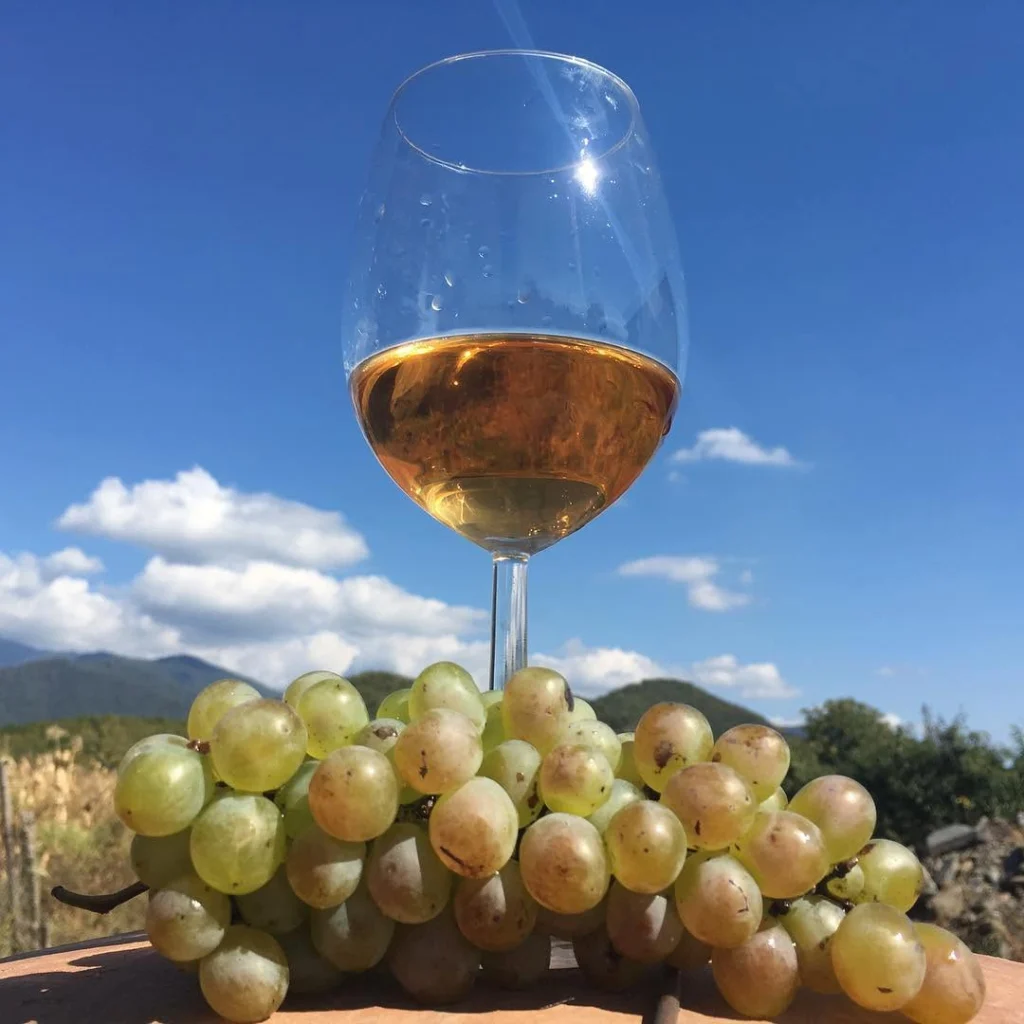
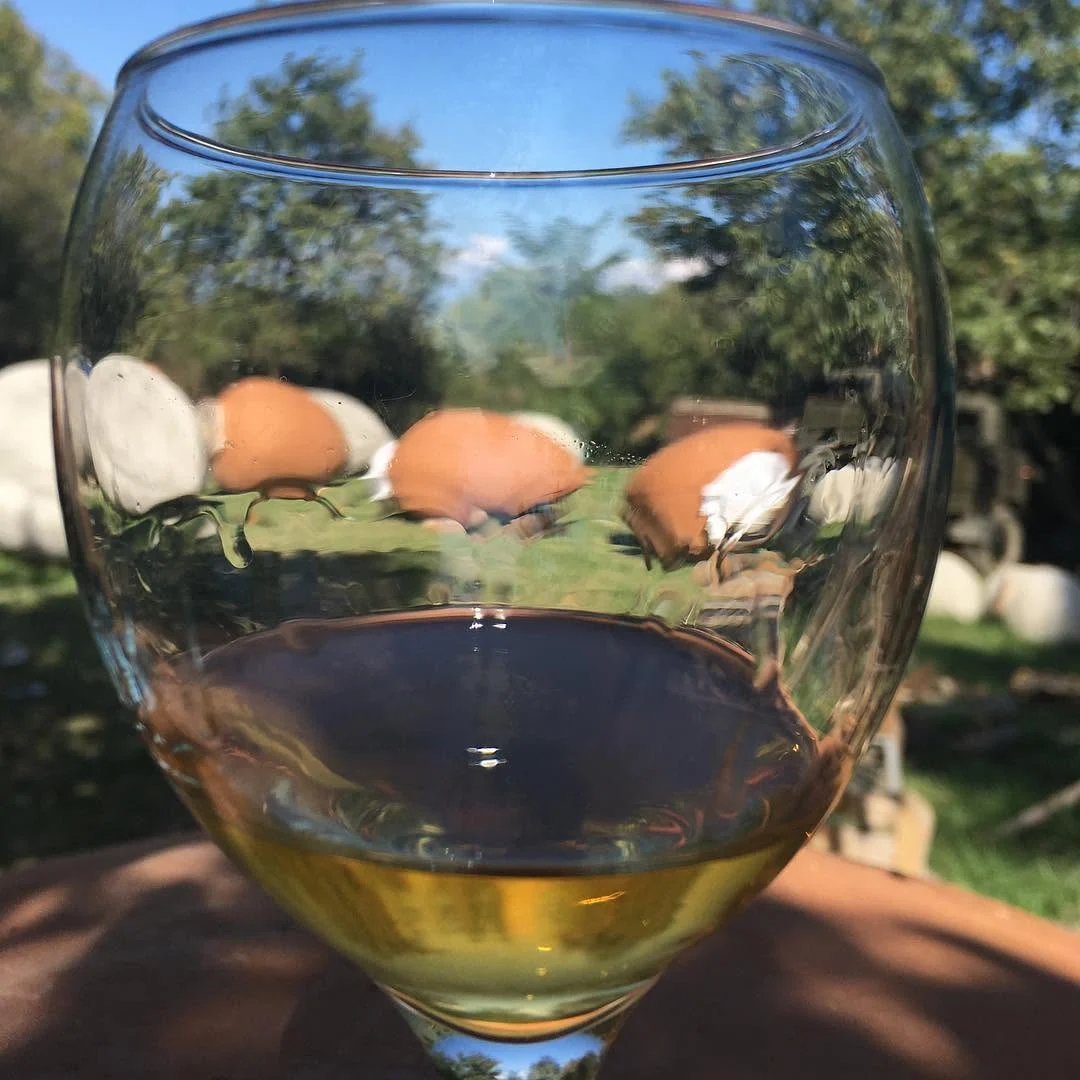
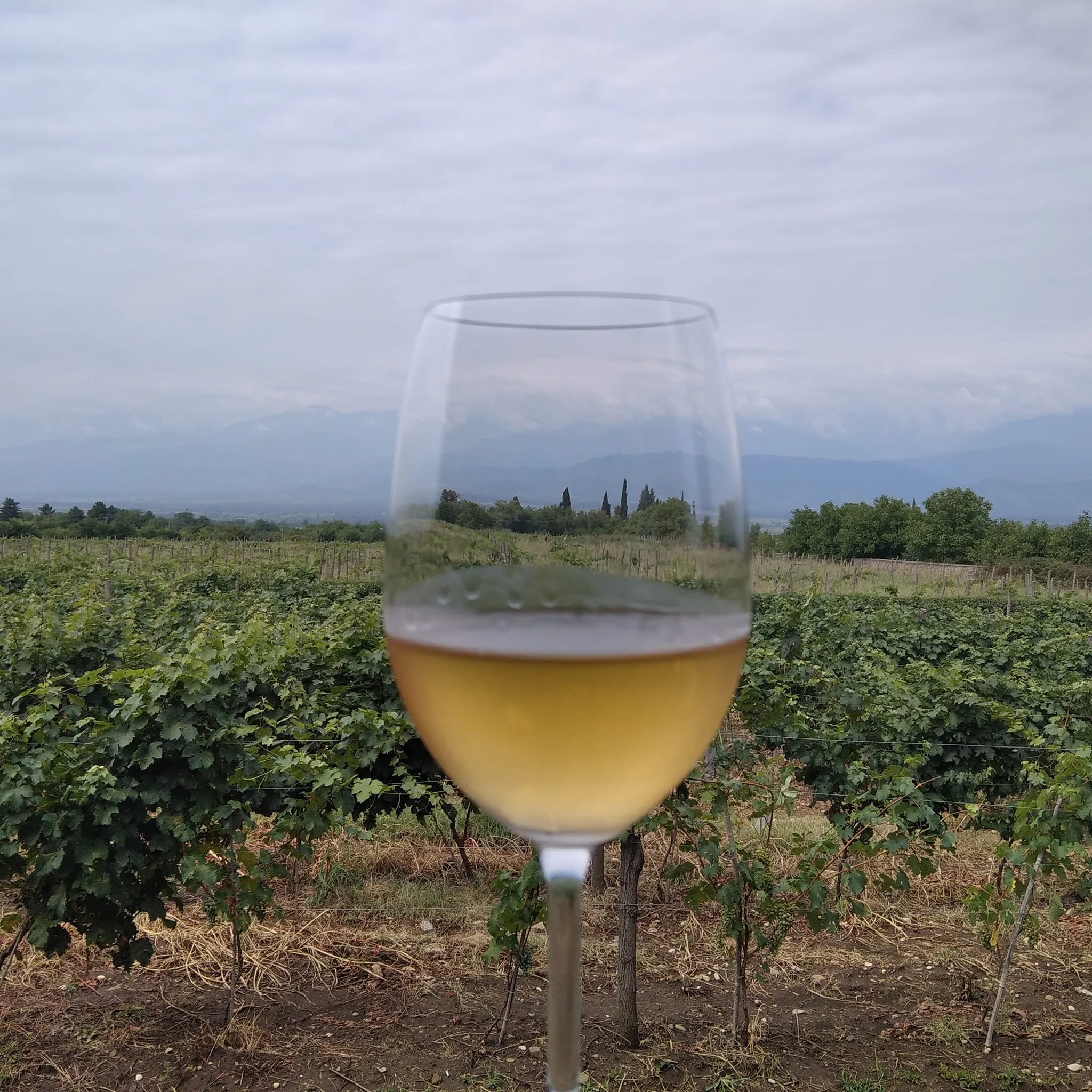
The first thing that surprises people is the colour. You expect white wine to be white. What arrives is amber — deep, slightly cloudy, the colour of strong tea — because the grapes sat on their own skins in a buried clay pot for six months, the way wine has been made in this valley since before anyone thought to write the method down.
Georgia has been making wine for about eight thousand years. That figure gets repeated so often on tourism websites that it has stopped meaning anything, so here is what it actually rests on: pottery shards from a village site forty kilometres south of Tbilisi, dated to around 6000 BC, with tartaric acid residue still in the clay. Not a legend. A chemistry result.
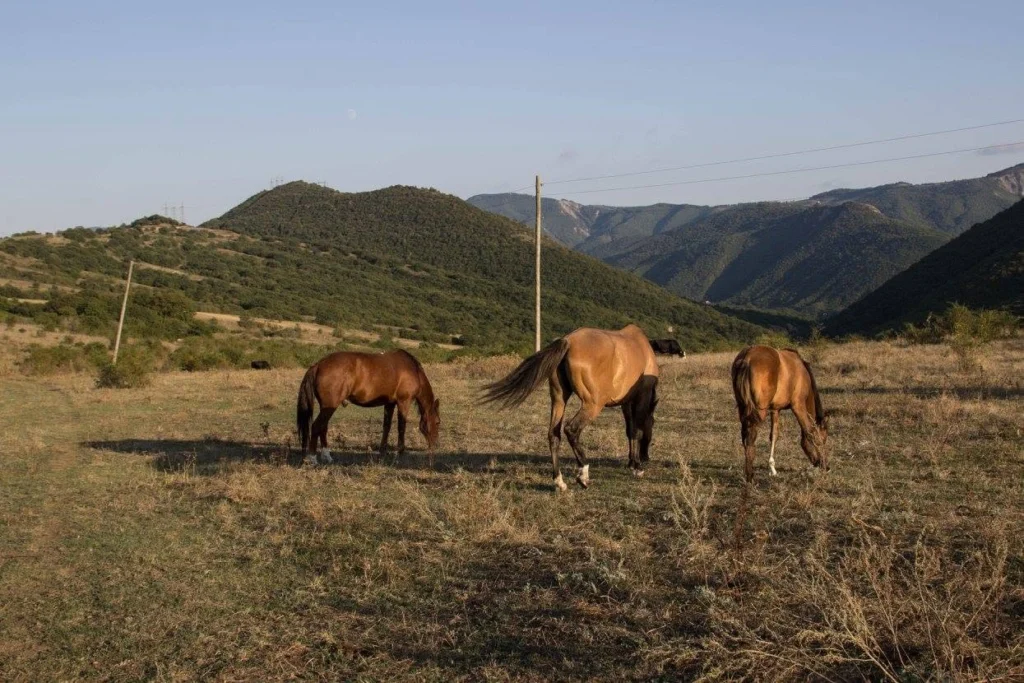
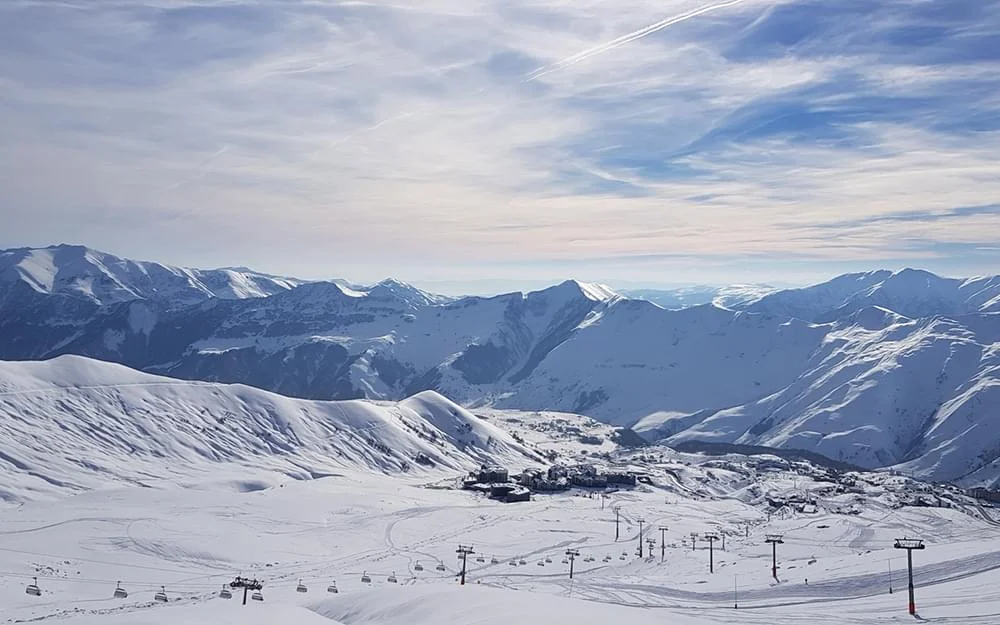
Kakheti is where that tradition is still a working industry rather than a heritage exhibit. Seventy per cent of Georgia’s grapes grow here, on a plain that runs east from Tbilisi with the Greater Caucasus standing along its northern edge. And underneath a great many courtyards there are still qvevri — egg-shaped clay vessels, lined with beeswax, buried to the neck so the earth keeps the temperature steady. UNESCO put the method on its Intangible Cultural Heritage list in 2013.
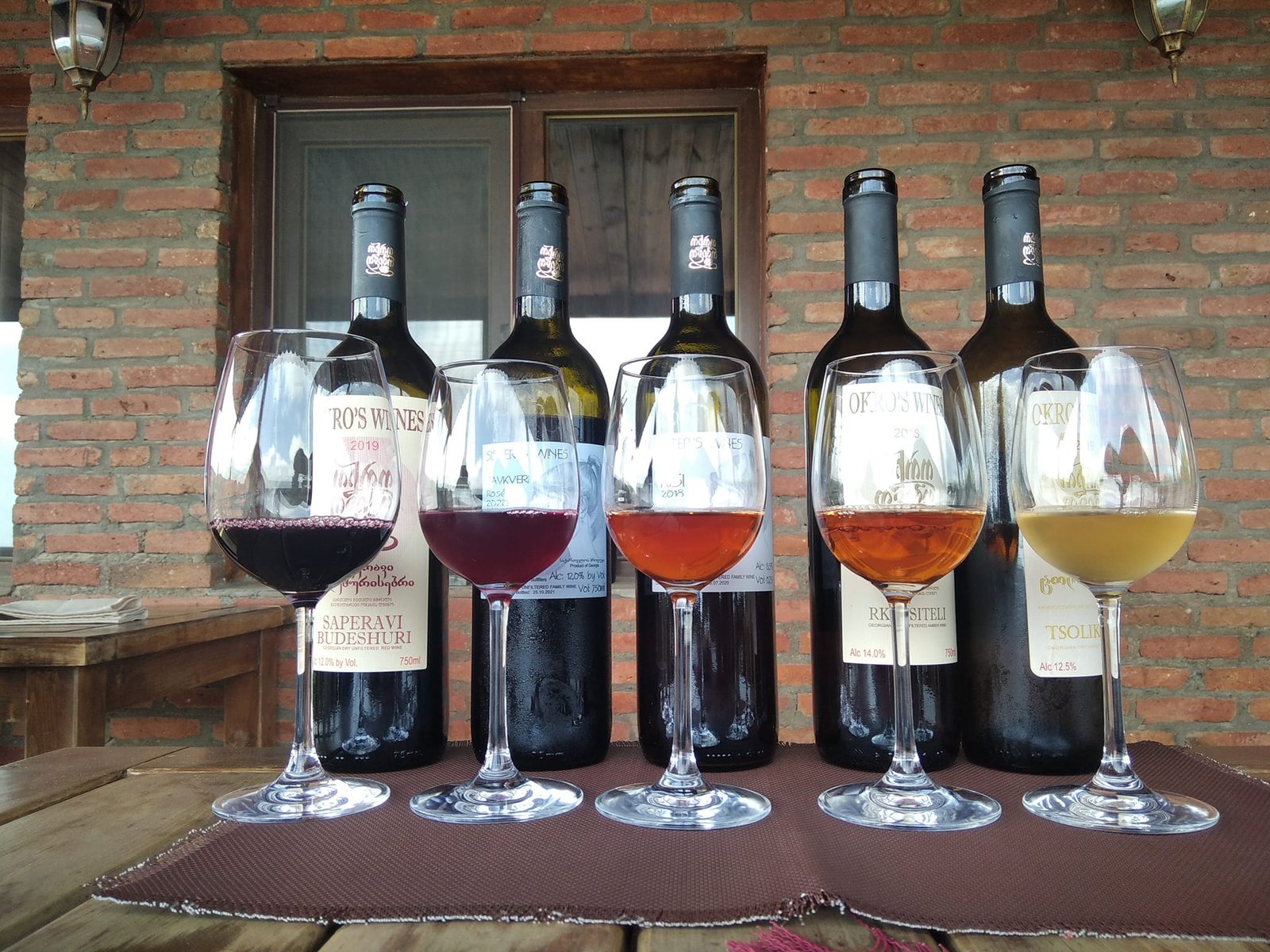
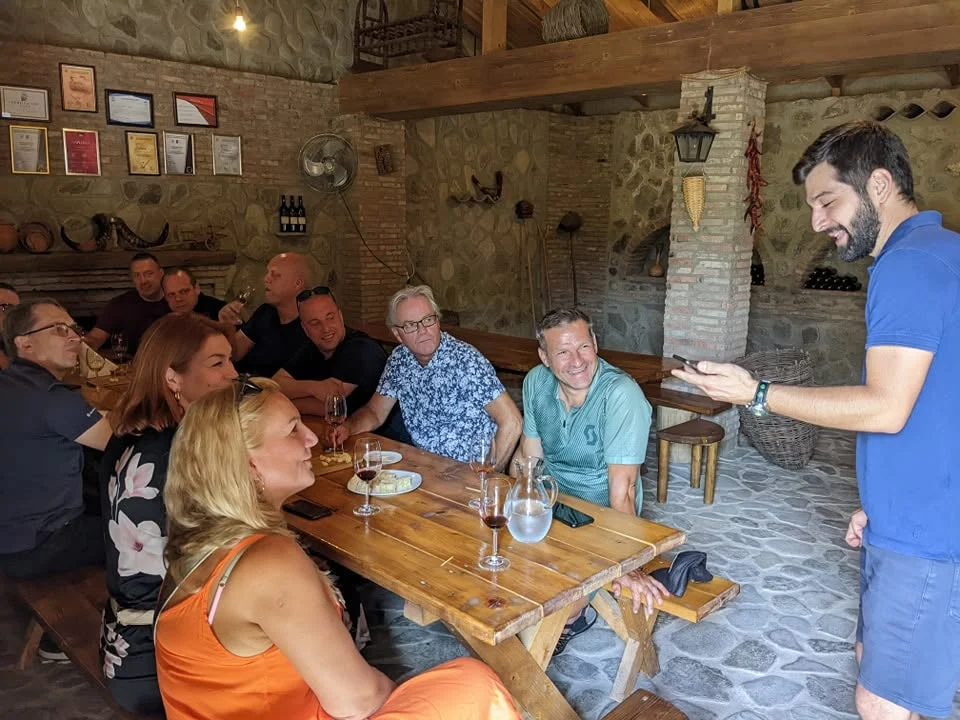
This tour goes to three small organic producers, not to the industrial wineries with a tasting counter and a coach park. That distinction is the whole point. At Beqa’s estate you taste in the vineyard he farms himself. At Okro’s in Sighnaghi, Jenny pours natural wines made with nothing added and nothing taken away. At Mosmieri you sit down to a proper Kakhetian lunch that will be considerably larger than the words “traditional lunch” prepare you for. And in the afternoon you meet Zaza, one of the small number of craftsmen left in Georgia who still throws qvevri by hand — a skill that came close to disappearing entirely.
One honest note about volume. Between twelve and fifteen wines across a day is a lot of wine. Nobody expects you to finish every pour, spittoons exist and using one is not rude, and your driver does not drink at all. Come hungry, pace yourself, and the day is one of the best in Georgia. Try to finish everything and you will remember the qvevri workshop only in outline.
What you’ll see
Tour highlights
- Three organic estates, no industrial wineries — small producers where the person pouring is usually the person who grew the fruit. You will not be handed a numbered glass and pointed at a display case.
- Twelve to fifteen wines across the day, including qvevri-fermented amber whites you will not easily find outside Georgia.
- Saperavi, tasted where it comes from — one of the very few grapes on earth with red flesh as well as red skin, which is why the wine comes out almost black.
- A qvevri master’s workshop — Zaza still coils these vessels by hand and fires them in a wood kiln, a craft practised now by only a handful of families in the country.
- Lunch at Mosmieri — a Kakhetian table, meaning far more dishes than there are people, with wine that does not stop arriving.
- Bread from a tone — shoti slapped onto the wall of a clay oven and pulled out four minutes later, eaten standing up, still too hot to hold properly.
- Sighnaghi — an eighteenth-century walled town on a ridge above the Alazani valley, with the Caucasus filling the horizon on a clear day and four and a half kilometres of Erekle II’s fortress wall still standing.
- Private vehicle, private guide — your group only, and the schedule bends if a tasting is going well.
Step by step
Tour itinerary
About eleven hours door to door, 09:30 to roughly 20:30. Times shift with the wineries — nobody in Kakheti has ever ended a tasting on schedule.
09:30 — Pickup in Tbilisi
Collected from your hotel or apartment. The drive east crosses the Gombori Pass into Kakheti, about ninety minutes, and the valley opens out below you on the descent with the Caucasus wall along the far side.
11:00 — The bakery
A half-hour stop at a village bakery to watch shoti go into the tone — a clay well of an oven, fired at the bottom, with the dough slapped directly onto the inside wall. It comes out in four minutes, blistered and impossible to hold. You eat it with sulguni cheese, standing in the doorway, and it ruins supermarket bread for you permanently.
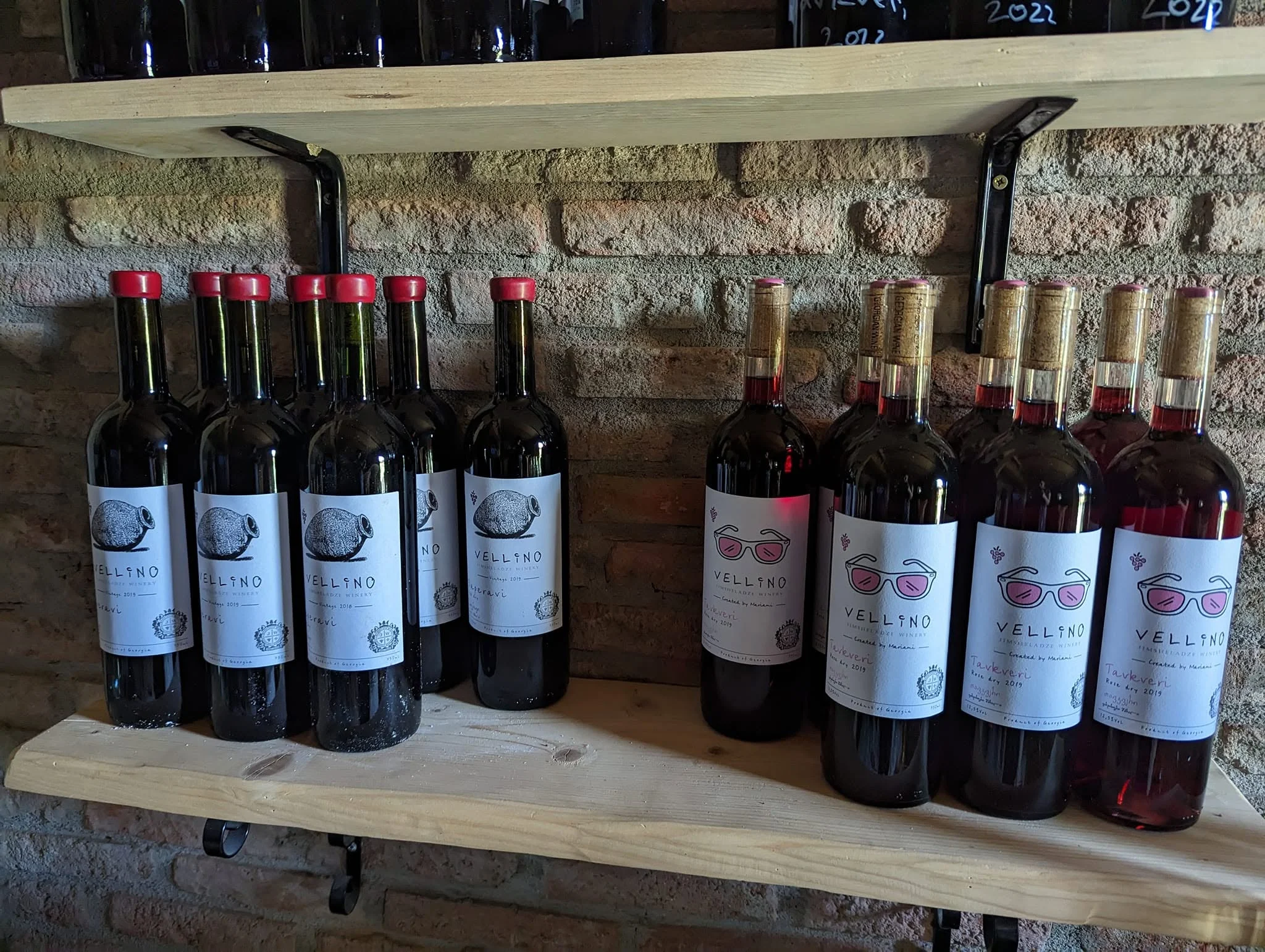
11:45 — Vellino, with Beqa
Ninety minutes at the first organic estate. Beqa walks you through the vineyard and the cellar and explains what organic actually means in practice here: no synthetic sprays, wild yeast, and minimal intervention once the fruit is in the qvevri. Then you taste — usually three to four wines, and this is where most people meet their first amber wine.
13:30 — Okro’s Wines, Sighnaghi
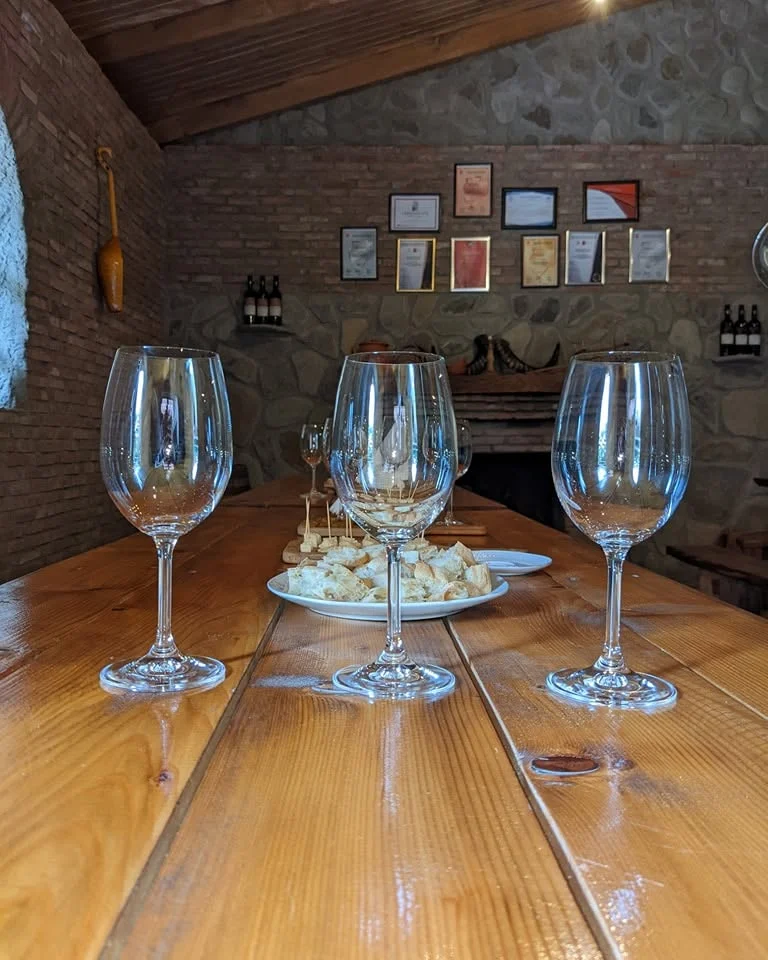
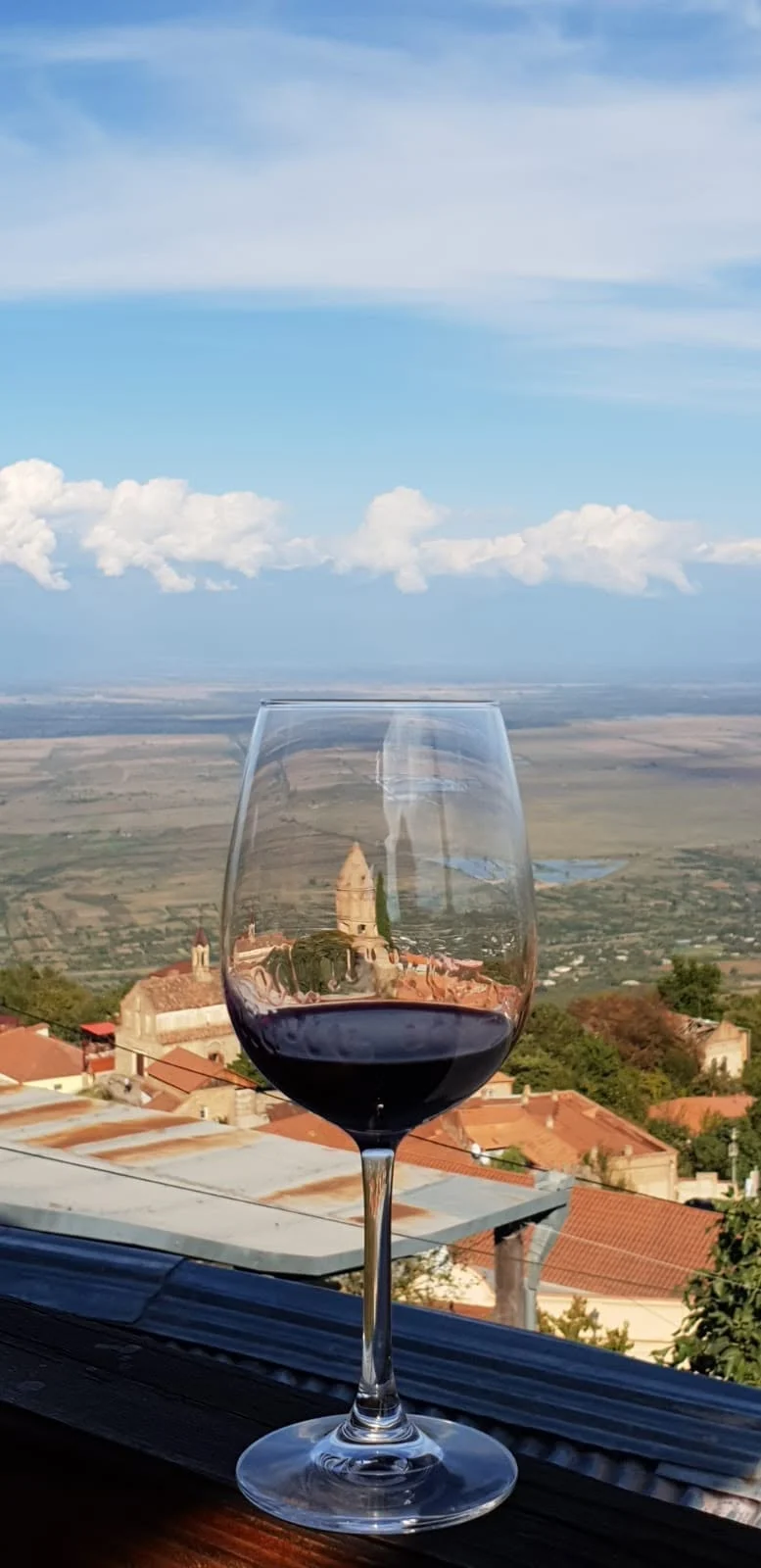
Ninety minutes in the walled town on the ridge. Jenny pours natural wines in the cellar — nothing added, nothing filtered out — and there is time afterwards to walk to the wall for the view down over the Alazani plain. Sighnaghi is small enough to see properly in half an hour and pretty enough that people plan a return trip from the terrace.
15:30 — Lunch at Mosmieri
Ninety minutes, and you will want all of them. A Kakhetian table: khinkali, mtsvadi grilled over vine cuttings, pkhali, fresh cheese, tomato and cucumber with walnut, and wine that keeps arriving whether or not you asked. If a toast is being made, wait for it to finish before you drink — the toasting here is structured, and the tamada’s floor is his own.
17:30 — Zaza’s qvevri workshop
Forty-five minutes with a qvevri maker. The vessels are built up in clay coils over weeks, fired in a wood kiln, then lined with beeswax and buried. Standing next to an unfired qvevri taller than you are is the moment the whole day connects — you have been drinking out of these all afternoon without seeing one made. Zaza pours his own wine too.
19:00 — Back to Tbilisi
Ninety minutes west, arriving around 20:30. Most people sleep for part of it and nobody minds.
Starting from
€200
per person
Locally operated since 2011
We reply within 24 hours
What your price covers
What’s included
Included
- Private air-conditioned vehicle — SUV or minivan depending on group size
- English-speaking driver-guide for the full day
- Tastings at all three organic wineries — between nine and eleven wines
- Traditional Kakhetian lunch with wine at Mosmieri
- Bread and cheese tasting at the village bakery
- Qvevri workshop visit, including a tasting with the maker
- Hotel pickup and drop-off in Tbilisi
- Bottled water throughout the day
- All entrance and tasting fees — nothing to pay at the door
- All taxes and booking fees
Not included
- Bottles you buy at the wineries — expect 20–60 GEL for something very good, and most people leave with several
- Shipping, if you buy more than your luggage allowance will take
- Breakfast and evening meal
- Travel insurance
- Tips for your driver-guide and the winery hosts — appreciated, never expected
- Personal expenses and souvenirs
Photographs
Gallery
Where you’ll go
Map & route
Practical details
Good to know before you go
What you will actually be drinking
| Grape | What it makes | What to expect in the glass |
|---|---|---|
| Saperavi | Georgia’s flagship red | Almost opaque. One of the rare grapes with red flesh as well as red skin — dark fruit, firm acidity, more structure than the price suggests |
| Rkatsiteli | The most planted white, and the classic amber | On skins in qvevri it turns orange-amber, with apricot, walnut skin and a grip more like a light red than a white |
| Mtsvane | Often blended with Rkatsiteli | More aromatic and floral; softens the blend |
| Kisi | A rarer amber | Nearly extinct thirty years ago. Dried pear and tea leaf, and increasingly the bottle sommeliers get excited about |
| Khikhvi | Rare white | Small plantings, honeyed and full — if it is poured, take the chance |
What “organic” means here
Not always the certificate. Small Kakhetian producers frequently farm organically without paying for certification, because the alternative — synthetic sprays and cultured yeast — arrived in Georgia relatively recently and plenty of families simply never adopted it. What you should ask, and what the winemakers will happily answer, is what goes into the vineyard, what yeast starts the fermentation, and how much sulphur goes in at bottling. That conversation tells you more than a logo does.
Pacing yourself, honestly
- Eat before you leave. The first tasting is at 11:45 and lunch is not until 15:30.
- Use the spittoon. Nobody is offended. Winemakers spit constantly; it is a professional habit, not an insult.
- Drink water between wineries. There is a bottle in the car for a reason.
- Chacha is not wine. If it comes out at the end of lunch, it is around 45 per cent alcohol, and it arrives faster than you can decline it.
Buying bottles
Every estate sells, and prices at the cellar door are a fraction of what the same wine costs in Europe. Georgia allows you to leave with a reasonable quantity for personal use, but check your airline’s limit and your destination country’s allowance before you commit to a case. The wineries can arrange shipping; ask before you taste, not after.
Timing your visit
| When | What it is like | Worth knowing |
|---|---|---|
| May – June | Green vineyards, mild, cellars quiet | Winemakers have time to talk — the best window for a proper conversation |
| July – August | Hot, up to 35°C on the plain | Cellars stay cool; the courtyards do not |
| Late September – October | Rtveli, the harvest | The most alive time to visit — but everyone is working, so tastings are shorter and you may be handed a bucket |
| November – April | Bare vines, cold, very few visitors | Cellars are full and the hosts are unhurried. An underrated season |
Practical details
- Bring cash in lari for bottle purchases — some small estates still do not take cards.
- Wear closed shoes. Cellar floors are often wet, and vineyard rows are uneven.
- Vegetarians eat extremely well at a Kakhetian table — pkhali, badrijani, lobio, cheeses. Vegan is possible with notice. Tell us when you book.
- Not suitable for under-18s as a tasting experience, though children are welcome on the trip and the restaurants are used to families.
- Book at least 48 hours ahead so the wineries can plan. Free cancellation up to 24 hours before departure.
From our travellers
Reviews
Before you book
Frequently asked questions
How much wine will we actually taste?
Between twelve and fifteen wines across the day — three to four at each of the three wineries, plus whatever Zaza pours at the workshop and the wine on the table at lunch. Pours are tasting size, not glasses, and there is a spittoon at every stop. Using it is normal and nobody will think less of you.
Do I need to know anything about wine?
No, and most of our guests do not. These are working producers, not a lecture. If you want the technical detail, ask and you will get it in considerable depth; if you would rather just drink good wine and hear how the family came to make it, that works too.
What makes Georgian wine different?
The qvevri. It is a clay vessel, lined with beeswax and buried up to its neck, and the wine ferments in it on the skins, stems and pips for months. For white grapes that produces amber wine — a category that barely exists elsewhere, and which tastes structured and tannic in a way no other white does. UNESCO listed the method as Intangible Cultural Heritage in 2013.
Are these wineries actually organic?
They farm organically — no synthetic pesticides, herbicides or fertilisers, wild yeast fermentation, minimal sulphur. Some hold certification and some do not, because certification is expensive and many small Kakhetian families simply never stopped farming this way. Ask the winemakers directly; they are straightforward about what they do.
Why small producers and not the famous wineries?
Because the large commercial wineries give you a tour of stainless steel and a tasting room with a till. The estates on this tour give you the person who grew the fruit, in the cellar where the qvevri are buried. It is a slower day and a much better one.
Can I buy bottles to take home?
Yes, at every stop, and cellar-door prices are a fraction of European retail — expect 20 to 60 GEL for something you would happily serve at home. Check your airline’s alcohol allowance first, and ask about shipping before the tasting rather than after it.
Is lunch included?
Yes — a full Kakhetian meal at Mosmieri with wine. Vegetarian is easy, vegan is possible with notice. Tell us any dietary requirements when you book so the winery can prepare.
How long is the day?
About eleven hours, from a 09:30 pickup to roughly 20:30 back in Tbilisi. Around three hours of that is driving, split between the trip out and the trip back.
Is the tour private?
Yes. Your own vehicle, your own driver-guide, your own pace. The per-person price drops as the group grows because the vehicle cost is shared.
What if I do not drink?
The day still works — the bakery, Sighnaghi, the lunch and the qvevri workshop are all worth the trip on their own, and the wineries will pour you juice or water without comment. Tell us in advance and we will let them know.
Ready when you are
Tell us your dates and how many of you are travelling. We’ll come back within 24 hours with availability, a confirmed price, and your guide’s name.