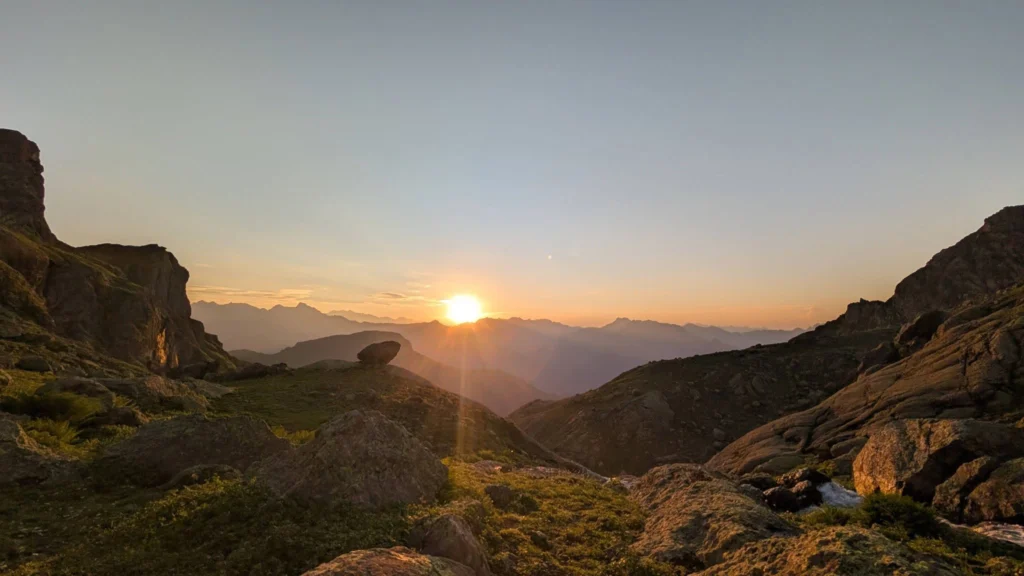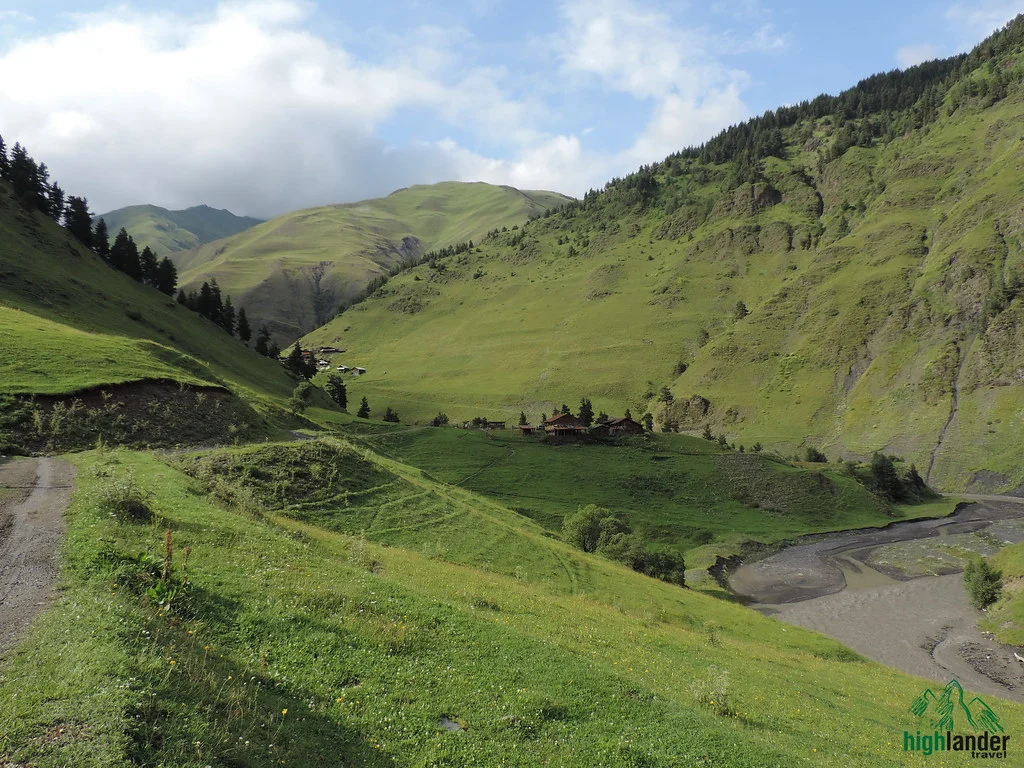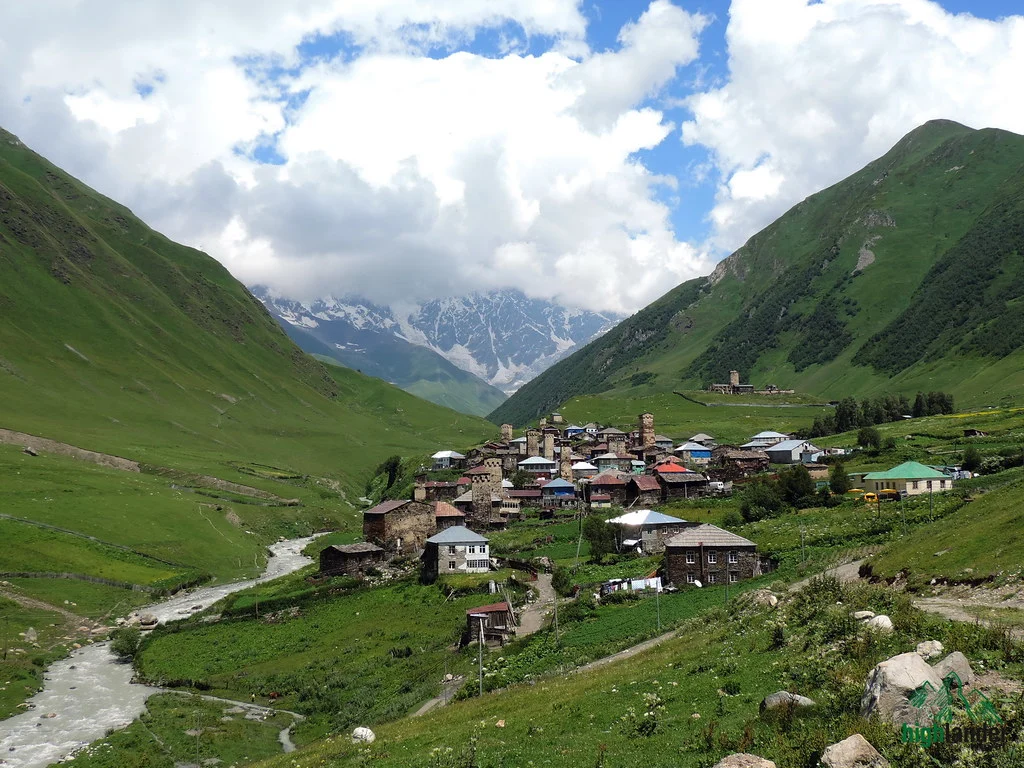
There is a moment on the second hour of the Abano road when the asphalt is long gone, the drop on your right has stopped being a slope and become a wall of air, and you understand exactly why nobody drives to Tusheti in an ordinary car. The road is 72 kilometres of gravel, switchback and washout. It takes five to six hours. It is open for roughly four months of the year, and for the other eight the region is sealed behind snow with fewer than a dozen people still living in it.
That is not a difficulty to be managed around. It is the entire reason Tusheti still looks the way it does.
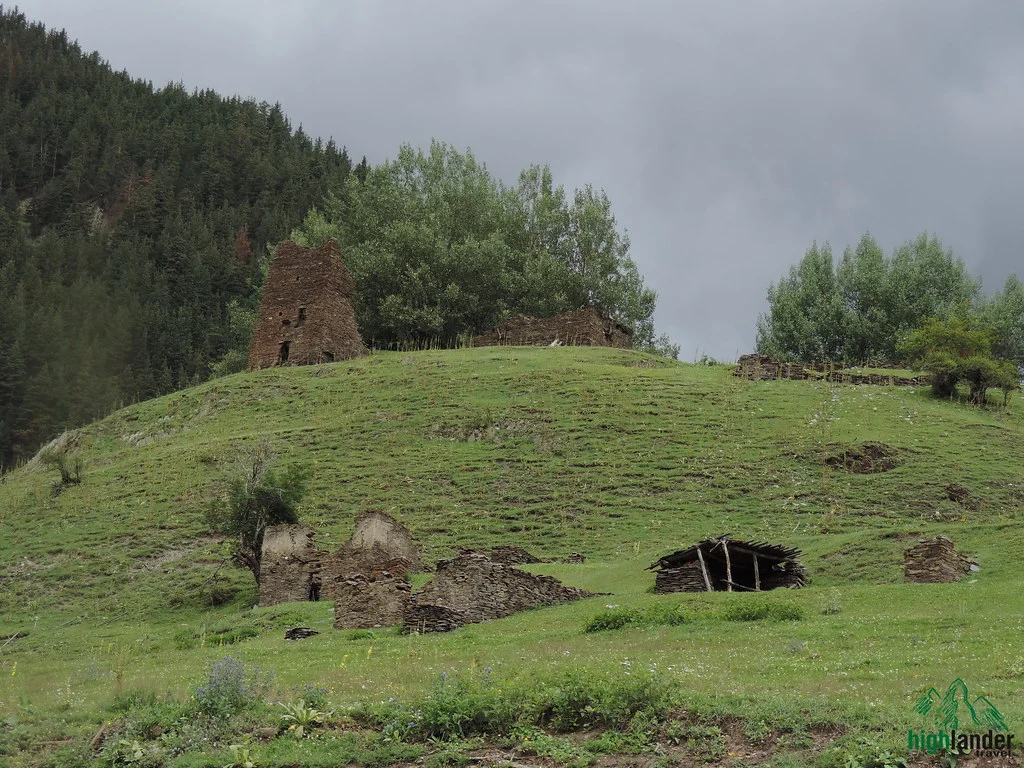
Because getting here has always been hard, the villages were never rebuilt, never modernised, never turned into anything. Slate-roofed stone houses sit under thirteenth-century defensive towers that were thrown up in a hurry when the Mongols came through. Sheep still walk down to the Shiraki plains for the winter and back up in June, the same transhumance route their owners’ families have used for centuries. The shrines are pre-Christian, still active, and still off-limits to women. Pork is not eaten here, and nobody will explain why beyond the fact that it is not done.
This tour gives you three days: one to get in, one full day on foot at altitude, one to get out. The middle day is the point — a sixteen-kilometre ridge walk that tops out around 3,050 metres on the spine between the two Alazani valleys, with the whole of Tusheti opening on both sides. In late June and early July that ridge is covered in Caucasian rhododendron, which turns the entire slope cream-yellow for about three weeks a year.
Who this is not for: anyone who gets carsick on mountain roads, anyone who needs reliable mobile signal, and anyone who would rather not spend two nights in a family guesthouse where dinner is whatever the household is eating. Who it is for: people who want to see the part of the Caucasus that tourism has not smoothed over yet, and who understand that the road is part of the deal.
What you’ll see
Tour highlights
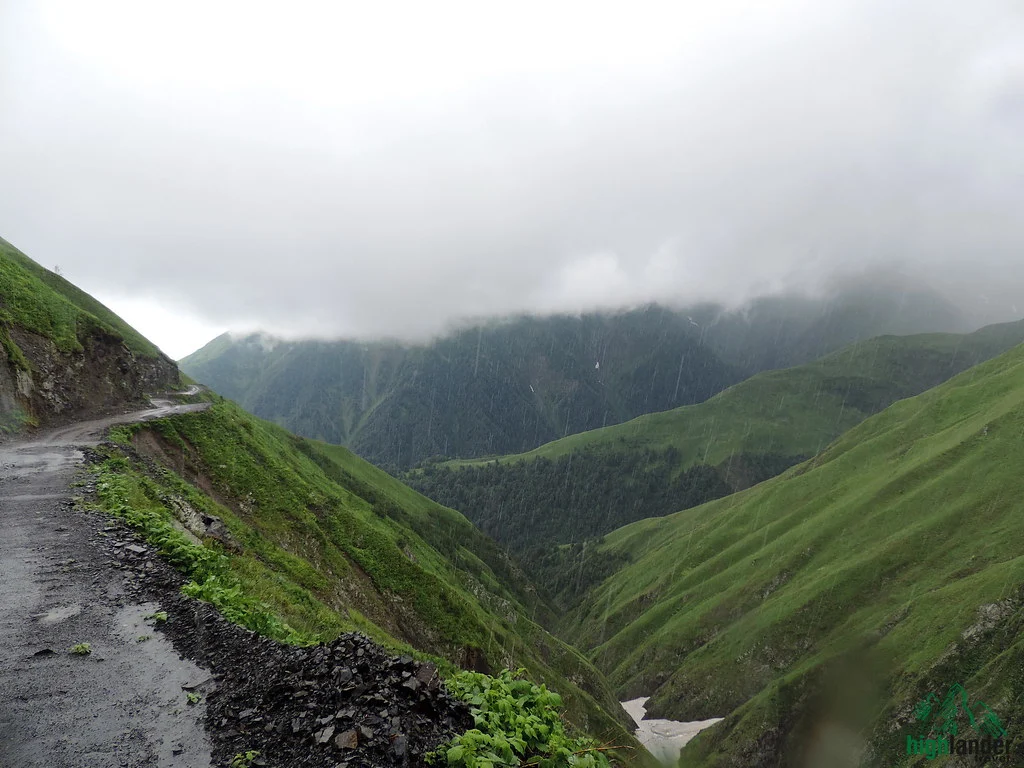
- The Abano Pass, 2,826 metres — the highest drivable pass in the Caucasus and, by common agreement among people who write about roads for a living, one of the more alarming ones. Five to six hours of gravel from Pshaveli, with no barrier between you and the valley.
- A full day on the Unagira ridge — sixteen kilometres on foot, climbing to about 3,050 metres on the divide between the Pirikiti and Gometsari valleys. Both valleys are visible at once from the top, and on a clear day so is the Dagestan border wall of peaks.
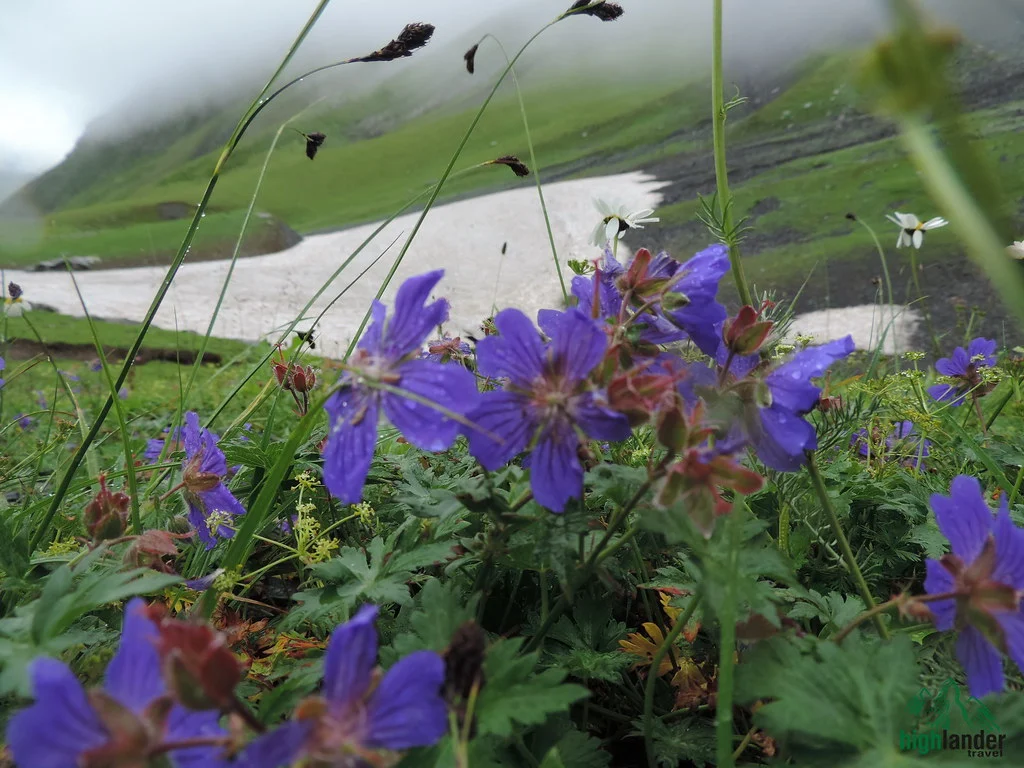
- Caucasian rhododendron in bloom — mid-June to mid-July, the upper slopes go cream and yellow. Miss the window by two weeks and you get green.
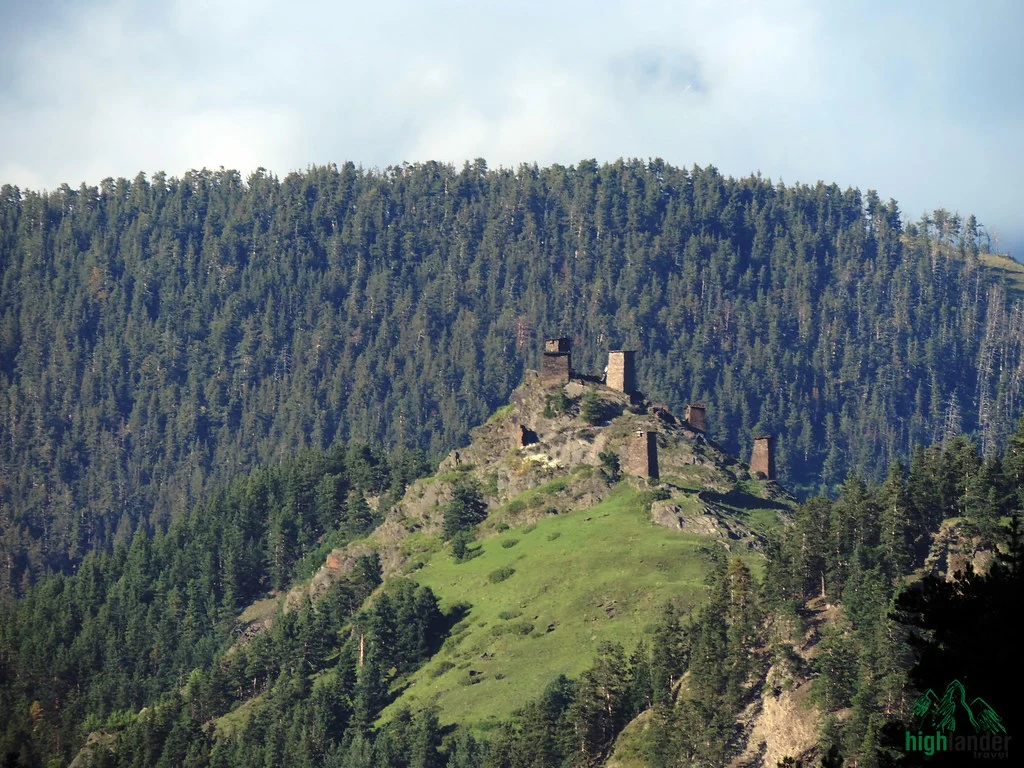
- The Keselo towers above Zemo Omalo — thirteenth-century stone towers built against the Mongol raids, restored in the early 2000s. One of them holds a small ethnographic museum, which is worth the twenty minutes.
- Shenako and Diklo — two villages on the eastern edge of Tusheti, close enough to Dagestan that you keep your passport in your pocket. Shenako has an 1843 church, unusual here; Diklo has fortress ruins on a spur above the gorge.
- Bochorna, at 2,345 metres — you pass it on the way in. It is the highest permanently inhabited settlement in Europe, and at the last census one man lived there year-round.
- Guda cheese and Tushetian beer — sheep’s cheese aged inside a sheepskin, sharp and salty and unlike anything sold in Tbilisi, and a barley beer brewed in wooden vats for the summer festivals.
- Two nights in a family guesthouse, not a hotel — which in Tusheti is the only honest option, and much the better one.
Step by step
Tour itinerary
Day 1 — Tbilisi to Omalo, over the pass
Roughly 250 km · 8–10 hours of travel · 2–3 km on foot
Pickup in Tbilisi at 07:00. The first three hours are easy: over the Gombori Pass into Kakheti, then a stop at Alaverdi Cathedral, an eleventh-century church fifty metres tall that held the record as Georgia’s highest for nine hundred years. You will want the wide lens.
Lunch in Alvani or Pshaveli, and then the asphalt ends. What follows is 72 kilometres that take five to six hours: the climb to the Abano Pass at 2,826 metres, the long descent past Bochorna, and finally the Alazani valley opening below you with Omalo on the far side. There is a checkpoint on the way — keep your passport accessible.
You reach Kvemo Omalo in the late afternoon and settle into the guesthouse in Zemo Omalo, the upper village. If the road has been kind and there is light left, the afternoon goes to Shenako and Diklo: an eight-kilometre drive east to the 1843 church at Shenako, then on to Diklo and a short walk up to the fortress ruins on the spur. If the pass has eaten the day, these move to Day 3 and nothing is lost.
Dinner at the guesthouse. Expect several dishes you did not order, and be warned that refusing the third helping requires real commitment.
Day 2 — the Unagira ridge
16 km on foot · around 800 m of ascent · high point about 3,050 m · 6–7 hours walking
The full day, and the reason to come. After breakfast a short transfer puts you at the trailhead, and the path climbs steadily out of the treeline onto the Unagira ridge — the wall of high ground separating the Pirikiti Alazani from the Gometsari valley.
The first hour is work. After that the gradient eases, the ground opens out into alpine meadow, and you spend most of the day walking a broad grassy crest with a valley falling away on either side. Shepherds’ camps, a lot of sky, and, if you are here between mid-June and mid-July, rhododendron in every direction.
You carry a packed lunch from the guesthouse and eat it on the ridge. Come down the same way in the afternoon, back to Omalo for dinner. This is a genuinely demanding day — not technical, but long, and at an altitude where the last two hours feel harder than they should.
A shorter alternative is always available: if the weather turns or the group would rather not commit to sixteen kilometres, we swap to the Pirikiti valley — driving to Dartlo, the tower village, and walking up to Kvavlo above it. Four hours instead of seven, and no less beautiful.
Day 3 — Keselo, and back over the pass
Roughly 250 km · 1–2 km on foot
A slower start. Walk up to the Keselo towers on the rock above Zemo Omalo — thirteen of them originally, built during the Mongol period, five restored and standing. The small ethnographic museum in one of the towers has the household objects, weaving and weapons that explain how a household here actually functioned.
Then the road again. We leave Omalo before midday, because the Abano crossing is not something to do in fading light, and afternoon storms build fast in July and August. Stop for lunch once you are back on tarmac in Kakheti, and expect to reach Tbilisi in the early evening.
If Shenako and Diklo were postponed on Day 1, we fit them in this morning and leave a little earlier.
Starting from
€590
per person
Locally operated since 2011
We reply within 24 hours
What your price covers
What’s included
Included
- Private 4×4 vehicle for your group only, with a driver who runs the Abano road regularly — this is not a road for a general-purpose driver
- English-speaking driver-guide for all three days
- Two nights in a family guesthouse in Zemo Omalo, twin or double rooms
- Full board in Tusheti — two breakfasts, two dinners, and a packed lunch for the ridge day
- Hotel pickup and drop-off in Tbilisi
- Fuel, parking and all road costs
- Tusheti Protected Areas entry
- Bottled water in the vehicle
- All taxes and booking fees
Not included
- Lunches on Day 1 and Day 3, taken in Kakheti on the way in and out — around 25–40 GEL each
- Alcohol beyond what appears on the guesthouse table
- Horse hire, if you would rather ride part of Day 2 than walk it
- Travel insurance — strongly recommended, and it should cover hiking to 3,100 m
- Tips for your driver-guide and the guesthouse family
- Personal expenses and souvenirs
Photographs
Gallery
Where you’ll go
Map & route
Tbilisi — city centre
Gombori Pass
Alaverdi Cathedral
Abano Pass
Upper Omalo
Shenako
Diklo
Keselo Fortress
Practical details
Good to know before you go
The season is short and it is not negotiable
The Abano road opens when the snow clears, usually somewhere between the first and third week of June, and closes again in mid-October. Those dates move by two weeks in either direction depending on the winter. We do not sell this tour outside the open season, and if the road closes early in a bad autumn we will move your date or refund you in full. Nobody drives that pass on snow to keep a booking.
| When | Conditions | Worth knowing |
|---|---|---|
| Mid-June | Road just opened, rivers high, everything green | Rhododendron starts; some guesthouses not yet fully open |
| Late June – mid-July | Rhododendron at its peak on the ridge | The best three weeks of the year for Day 2 |
| Late July – August | Warmest, busiest, afternoon thunderstorms | Atengenoba festival falls in this window — worth timing for |
| September | Clear air, cold nights, autumn colour by month’s end | Quietest good month; take a warmer sleeping layer |
| Early October | Beautiful and risky — first snow can close the pass | Book with a flexible date |
What to bring — this list matters more than usual
- Proper hiking boots with ankle support. Sixteen kilometres on uneven alpine ground is not trainers territory.
- Layers, including a warm one and a waterproof. Nights in Omalo drop into single figures even in July, and weather on the ridge changes inside half an hour.
- Any medication you take, in the quantity you need. There is no pharmacy in Tusheti. Bring painkillers, plasters, blister tape and anything for an upset stomach from Tbilisi.
- Cash in lari. No ATM, no card machines. Budget for lunches, drinks, horses and tips, and bring more than you think.
- Your passport. Tusheti runs up against the Dagestan border and there is a checkpoint on the road.
- A power bank. Guesthouse electricity comes from solar and small hydro, and it is not always on when you want it.
- Sun protection. At 3,000 metres, on open grass, with no shade for six hours — people underestimate this every single season.
Connectivity
Patchy. Magti generally works in Omalo and around the Keselo towers; elsewhere in the valleys you will have nothing. Guesthouse wifi exists in the sense that it is advertised. Tell whoever needs to know that you will be off-grid for two days, and enjoy it.
Local customs worth respecting
- Pork is not eaten in Tusheti. Do not bring it, do not ask for it.
- The shrines are active and women may not approach them. They are usually low stone enclosures with animal horns on them, sometimes unmarked. Your guide will point them out; if in doubt, keep your distance.
- Ask before photographing people, particularly at the shrines and during festivals.
- Toasts are structured, not casual. If a toast is being made, wait for it to finish before drinking.
Fitness and altitude
Day 2 is rated moderate to demanding: 16 kilometres, around 800 metres of ascent, six to seven hours on the move, topping out at roughly 3,050 metres. You do not need technical skills, but you do need to be comfortable walking all day. Altitude sickness is uncommon at this height, though most people notice they are slower than usual. The shorter Dartlo–Kvavlo alternative is available on the day at no extra cost, and choosing it is not a failure.
Group size and vehicles
Up to six people travel in one 4×4. Larger groups need a second vehicle, which changes the price — ask us for a quote.
Booking
Book at least a week ahead in high season; Omalo guesthouses fill up in late July. Free cancellation up to seven days before departure. If the pass is closed on your date, you move the tour or take a full refund.
From our travellers
Reviews
Before you book
Frequently asked questions
How dangerous is the road to Tusheti?
It has a serious reputation and it earns some of it: 72 kilometres of unpaved single-track with unprotected drops, blind corners and occasional washouts. What makes it safe in practice is the driver. Ours run this road throughout the season, know where the bad sections are that week, and will wait rather than force a crossing in bad weather. Accidents on Abano overwhelmingly involve tourists in rental cars with no 4×4 and no experience of the pass.
When is Tusheti open?
Roughly mid-June to mid-October, depending entirely on snow. The pass is closed for the rest of the year and there is no alternative road in. We only run this tour when the road is genuinely open.
How long does it take to drive to Omalo from Tbilisi?
Eight to ten hours in total, of which five to six are the unpaved section from Pshaveli over the Abano Pass. It is about 250 kilometres, which tells you almost nothing useful about how long it takes.
How hard is the hiking?
Day 2 is 16 kilometres with around 800 metres of ascent and a high point near 3,050 metres — six to seven hours of walking. Nothing technical, but it is a full day and you should be comfortable on your feet. A four-hour alternative in the Pirikiti valley is available instead, decided on the morning, at no extra cost.
Where do we stay in Tusheti?
A family guesthouse in Zemo Omalo, the upper village, for both nights. Rooms are simple, hot water depends on the sun, and the food is whatever the household is cooking — usually a great deal of it. There are no hotels in Tusheti and there is nothing to be gained by pretending otherwise.
Is there mobile signal and wifi?
Sometimes in Omalo, rarely elsewhere. Assume you will be unreachable for two days and tell people so before you leave.
Do I need a permit for Tusheti?
No permit is required, but Tusheti borders Dagestan and there is a checkpoint on the road, so carry your passport and keep it accessible rather than at the bottom of a bag.
Can I do Tusheti in two days instead of three?
You can, and we will arrange it, but we would rather you didn’t. Two days means six hours of mountain road, one night, and six hours back — you spend more time in the vehicle than out of it. The third day is what turns a long drive into a trip.
Is there an ATM in Tusheti?
No, and nowhere takes cards. Bring all the cash you will need in lari before you leave Kakheti.
What is the food like?
Mountain cooking, mostly from the household: lamb, potatoes, cheese, fresh bread, and Guda — sheep’s cheese matured in a sheepskin, sharp and salty. Vegetarian guests eat well; vegan is possible with notice. Pork is not eaten anywhere in Tusheti.
Ready when you are
Tell us your dates and how many of you are travelling. We’ll come back within 24 hours with availability, a confirmed price, and your guide’s name.